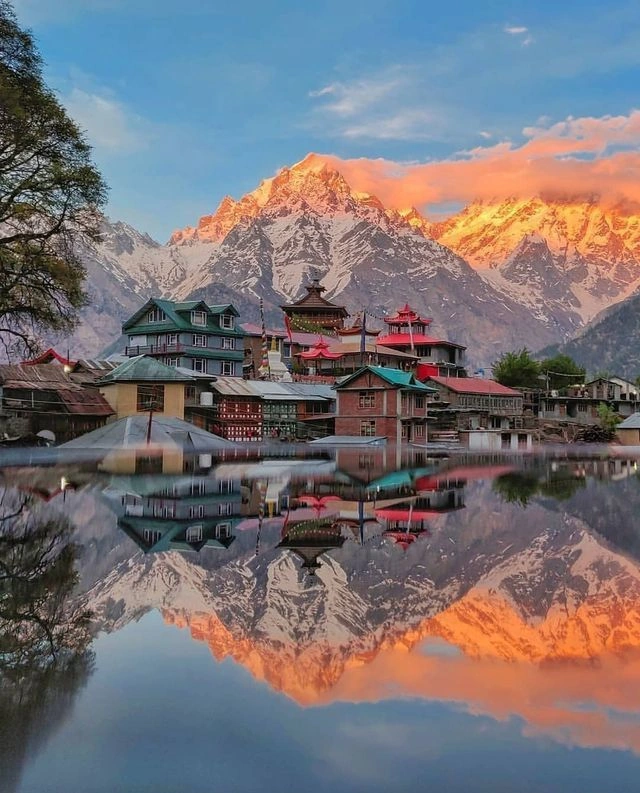
-
Discover Himachal Pradesh: The Ultimate Travel Guide to the Land of Gods & Hidden Valleys
When you say “Himachal Pradesh,” most people immediately think of the massive traffic jams on Shimla’s Mall Road, the overcrowded cafes of Kasol, or the commercial chaos of Solang Valley.
But at The Valley of Depth, we don’t do commercialized tourism. Himachal Pradesh (literally translating to the “Province of Snow-Laden Mountains”) is split into wildly diverse geographical worlds—from the lush, emerald cedar forests of Kullu, Mandi, and Kangra to the jagged, trans-Himalayan cold deserts of Kinnaur, Lahaul, and Spiti. And just like everywhere else in the Himalayas, the real magic lies at the end of the longest, most winding roads.
Whether you are planning a peaceful multi-generational family holiday, renting a scooty with your friends to chase hidden waterfalls, or strapping luggage onto an adventure motorcycle to conquer 15,000-foot passes, this exhaustive, place-by-place master guide covers every classic hub and untouched secret valley across Himachal Pradesh.
General Overview of Himachal Pradesh
Before diving into specific destinations, here is the universal culture and identity across the state:
-
The People & Culture: Revered as Devbhoomi (The Land of Gods), every single village in Himachal is governed, protected, and guided by a local presiding deity (Devta or Devi). Lower valleys reflect proud Pahadi Rajput and Gaddi shepherd heritage alongside intricate Kath-Kuni architecture (interlocking stone and deodar wood built without mortar to survive earthquakes), while the upper frontier valleys of Kinnaur, Lahaul, and Spiti practice ancient Tibetan Buddhism.
-
Traditional Food: Built for sub-zero mountain winters, Himachali cuisine is rich, earthy, and slow-cooked. Must-try dishes include Dham (a traditional multi-course festive feast cooked by hereditary Brahmin chefs called Botis in brass utensils without onion or garlic, served on stitched leaf plates called Pattals), Siddu (steamed wheat buns stuffed with crushed walnuts, poppy seeds, or spiced lentils, served with a generous pour of pure desi ghee and mint-coriander chutney), Babru (stuffed black-gram kachoris), Chha Gosht (tender lamb slow-cooked in sour yogurt and gram flour gravy), Tudkiya Bhath (spiced Pahadi lentil pilaf), and fresh pan-fried Himalayan Brown & Rainbow Trout.
-
Traditional Dress: Men famously wear the colorful, geometric-bordered Himachali Topi (green velvet in Kinnaur and Rampur, bright multicolored weaves in Kullu) paired with a woollen Chola and waistcoat (Sadri). Women in the valleys wear a vibrant square headscarf knotted at the back called a Dhatu and a thick, hand-woven sheep-wool wrap called a Pattu, fastened at the shoulders with ornate silver brooches (Boomani) and long silver chains (Chandrahar).
-
Festivals: Kullu Dussehra (held in October, where over 200 village deities are carried down from the mountains in grand wooden palanquins to Dhalpur Maidan to pay respects to Lord Raghunath), Phagli & Halda (mystical late-winter festivals featuring sacred bonfires and ancient wooden mask dances to banish evil spirits and welcome spring), Minjar Mela (Chamba’s week-long maize-blossom harvest celebration), and Losar (the Tibetan New Year celebrated across Spiti and Kinnaur with Chham monastic dances).
Part 1: The Classic & Extended Hubs (With Secret Outskirts)
-
-
1. Manali, Old Manali & Sethan: Cedar Forests, Igloo Villages & The Lahaul Gateway
While the main Mall Road of Manali has turned into a bustling commercial hub, stepping just a few kilometers outside the town limits transports you into ancient deodar sanctuaries, bohemian riverside cafes, and high-altitude snow deserts.
-
Why Go & Famous For: Manali is the undisputed adventure capital of Himachal. It is famous for the 16th-century wooden Hadimba Temple, the laid-back backpacker vibe of Old Manali, India’s first winter Igloo Village in Sethan, the boiling geothermal shrines of Manikaran, and the engineering marvel of the Atal Tunnel, which blasts straight through the Pir Panjal range into the stark, glacier-carved Lahaul Valley.
-
Best Season: March to June (for pleasant 15°C–25°C summer weather, blooming apple orchards, and full access to high passes) and December to February (for deep snowfall, skiing, and staying inside real snow igloos). Avoid July and August, when heavy monsoon cloudbursts swell the Beas River and trigger highway landslides.
-
Infant, Family & Elderly Suitability: Highly Recommended in Manali Town, Old Manali, and Naggar, where multi-specialty medical facilities (like Lady Willingdon Hospital) are accessible and the altitude (6,725 ft) is comfortable for all ages. However, Rohtang Pass (13,050 ft), the Atal Tunnel / Sissu (10,170 ft), and winter Sethan are strictly NOT newborn-friendly or safe for fragile seniors with heart/lung issues due to the sudden elevation spike, thin air, and freezing sub-zero winds.
-
Pro-Tip for Bachelors & Solo Travelers: Skip the overpriced union taxis! Rent a scooty (Honda Activa/TVS NTorq for ₹500 to ₹700/day) or a Royal Enfield Classic 350 / Himalayan 450 (₹1,100 to ₹1,600/day) along the Old Manali bridge, Mall Road, or Aleo road.
-
Where You CAN Ride: A two-wheeler is the ultimate way to explore Old Manali, Vashisht, Solang Valley, Naggar Castle, Jana Waterfall, the day-trip gorge to Manikaran, and—during dry summer and autumn months (May–October)—ride straight through the Atal Tunnel to Sissu and Khoksar.
-
Where You CANNOT Ride: Two-wheelers are strictly banned from entering the Atal Tunnel during winter snowfall or black-ice alerts. Furthermore, never attempt to take a scooty up the icy hairpins of Sethan in winter (only local 4×4 snow-chained Gypsies are permitted past the Prini barrier).
-
-
How to Reach from Delhi:
-
By Volvo Bus: Overnight luxury AC Volvos/Scania buses (HRTC Himsuta and private operators) depart Majnu Ka Tilla and ISBT Kashmere Gate (Delhi) between 6:00 PM and 9:30 PM, dropping you at Manali Private Bus Stand by 7:30 AM (₹1,100 to ₹1,800).
-
By Road (Car/Bike): A fast, scenic 8.5 to 10-hour drive (535 km) via Delhi -> Panipat -> Ambala -> Kiratpur–Nerchowk Four-Lane Expressway (with high-speed tunnels bypassing Bilaspur/Mandi traffic) -> Aut Tunnel -> Kullu -> Manali.
-
By Air: Fly from Delhi to Bhuntar Airport (KUU), located 50 km south of Manali, followed by a 1.5-hour pre-paid taxi ride (₹2,200).
-
Spiritual & Heritage Circuit (With Exact Routes & How to Reach)
Manali and the surrounding Kullu-Parvati valley form one of the oldest sacred landscapes in the Himalayas, where Kath-Kuni timber temples and boiling geothermal springs bring ancient mythology to life:
-
1. Hadimba Devi Temple (Dhungri Temple) & Ghatotkacha Shrine:
-
Heritage & Significance: Built in 1553 CE by Maharaja Bahadur Singh, this iconic four-tiered pagoda temple stands in the middle of the dense Dhungri Van Vihar deodar forest. Dedicated to Hidimba Devi—the wife of Pandava brother Bhima and mother of the warrior Ghatotkacha—the temple has no idol inside; instead, priests worship a colossal natural rock outcrop protruding from the earth where Hidimba meditated, surrounded by intricate woodcarvings of dancers, animals, and deities. Just 70 meters away stands the open-air tree shrine of her son, Ghatotkacha, draped in ancient horns and iron tridents.
-
Route & How to Reach: Located 2 to 2.5 km uphill from Manali Mall Road via Circuit House Road. You can walk up through the shaded cedar forest trail in 20 minutes, take a local auto-rickshaw from Mall Road (₹150 to ₹200), or ride your rented scooty right up to the temple parking gate (10-minute ride; Entry is Free).
-
-
2. Manu Temple (Old Manali):
-
Heritage & Significance: The town of Manali literally takes its name from Manu-Alaya (“The Abode of Manu”). This ancient stone-and-deodar temple is the only shrine in India dedicated to Sage Manu, the progenitor of the human race in Hindu cosmology, who is believed to have stepped off his ark on this very mountain slope after the great primeval flood (Maha Pralaya).
-
Route & How to Reach: Located 3 km northwest of Mall Road in the heart of Old Manali. Cross the Manalsu River bridge onto Old Manali Road and ride or take an auto (₹200) up to the Old Manali village square. Because the final 500 meters consists of steep, narrow cobble-stoned village steps, park your vehicle at the Old Manali bazaar parking lot and walk the last 10 minutes uphill through historic wooden apple-grower homes.
-
-
3. Vashisht Temple & Geothermal Sulphur Hot Springs:
-
Heritage & Significance: Perched above the Beas River gorge, this 4,000-year-old Kath-Kuni stone-and-wood complex houses the twin shrines of Sage Vashisht (the royal guru of Lord Rama) and Lord Rama. According to legend, when Sage Vashisht was grief-stricken after learning that his children had been slain by Vishwamitra, he tied himself up and jumped into the river—only for the river to refuse to drown him and burst banks as the Vipasha (Beas). His disciple Lakshmana then fired an arrow into the ground here to bring forth natural geothermal sulphur hot springs. Today, the temple features separate, enclosed stone bathing tanks (Kunds) for men and women fed by piping-hot mineral water prized for healing skin and joint ailments.
-
Route & How to Reach: Located 3.5 to 5 km north of Manali Mall Road along the Manali–Leh Highway. Drive 2 km to the Bahang bridge, turn right across the Beas River, and climb 1.5 km of steep hairpin bends up to Vashisht village chowk. Easily reachable in 15 minutes via local auto-rickshaw (₹200–₹250), rented scooty/bike, or a 45-minute riverside walk from Old Manali.
-
-
4. Manikaran Temple Complex (Lord Shiva Temple, Ramachandra Temple & Manikaran Sahib Gurudwara):
-
Heritage, Mythology & Geothermal Wonder: Situated at 5,775 feet in the narrow canyon of the roaring Parvati River, Manikaran (“The Ear-Jewel”) is a breathtaking symbol of spiritual harmony where a revered Hindu temple complex and a historic Sikh Gurudwara stand side by side over boiling underground springs.
-
The Hindu Shrines: Mythology states that Lord Shiva and Goddess Parvati were so enchanted by this green valley that they stayed here for 11,000 years. While bathing in the stream, Parvati lost her precious gemstone earring (Mani) to the subterranean realm (Patal Lok). When Shiva’s attendants failed to find it, Shiva opened his third eye in fury—causing the earth to shake until the serpent deity Sheshnag hissed from below, shooting a geyser of boiling water and thousands of matching jewels into the air. Today, the ancient Lord Shiva Temple (which tilted slightly during the massive 8.0-magnitude Kangra earthquake of 1905 yet miraculously survived intact) and the 17th-century Sri Ramachandra Temple (built by Raja Jagat Singh of Kullu to house a rare idol brought straight from Ayodhya) anchor the complex.
-
Gurudwara Sri Manikaran Sahib: Commemorates the historic visit of Guru Nanak Dev Ji and his disciple Bhai Mardana in 1574 विक्रमी (1517 CE). When Bhai Mardana collected flour and lentils from locals for Langar (community kitchen) but had no fire to cook the food, Guru Nanak instructed him to lift a stone—unleashing a boiling hot spring where raw chapatis that initially sank miraculously floated back up fully baked!
-
The 94°C Boiling Kunds: The geothermal uranium-and-sulphur springs here emerge from the earth at a scalding 88°C to 94°C. Even today, no gas or firewood is used to boil the Langar rice and dal—giant brass pots and muslin bags of grain are submerged directly into the boiling temple pools and come out steaming hot in 20 minutes! Pilgrims can also sit inside natural geothermal steam caves and bathe in temperature-mixed indoor Sarovars.
-
-
Route & How to Reach from Manali (76 to 85 km | 2.5 to 3 Hours One-Way):
-
The Driving/Riding Route: Manali -> Naggar/Kullu Highway (NH3) -> Bhuntar (cross the Beas–Parvati river confluence bridge just past Bhuntar Airport and turn left onto the Parvati Valley road) -> Jari -> Kasol -> Manikaran.
-
By HRTC Bus (Budget): Board any Kullu/Bhuntar bus from Manali Bus Stand (₹80 to ₹110; 1.5 hours), alight at Bhuntar Bus Stand, and hop onto a direct local bus to Manikaran (₹90; buses depart every 20–30 minutes and take 1.5 hours).
-
By Rented Bike / Scooty (Bachelors): A spectacular 80 km canyon ride hugging the Beas and Parvati rivers. Use a 125cc+ scooty or a 350cc Royal Enfield, as the 35 km stretch from Bhuntar to Manikaran features narrow cliff cuts and waterfall crossings.
-
By Private Taxi (Families & Seniors): Book a direct one-way cab (₹1,950 to ₹2,500 for a Hatchback/Sedan) or a full-day return excursion from Manali (₹3,000 to ₹3,800 for a Sedan; ₹3,500 to ₹6,000 for a 6-seater Ertiga/Innova depending on stops at Kasol and Kullu).
-
-
Other Key Spots (The Classic Route)
-
Wildlife & Forests: Walk inside the Manali Wildlife Sanctuary & Van Vihar, a dense canopy of towering 150-foot Deodar trees right beside the rushing Beas River.
-
Adventure (Solang Valley): Located 13 km from town, Solang is the year-round hub for tandem paragliding (₹1,800 short fly / ₹3,500 high fly from the ropeway summit), Gondola cable car rides (₹850/person), giant zorbing balls (₹500), ATV quad rides (₹1,200–₹2,000), and winter skiing/snowboarding courses.
-
Waterfalls: Trek 3.5 km through pine trees and apple orchards starting right behind Vashisht Temple to the thunderous, two-tiered Jogini Waterfall (Free entry; 2.5 hours round-trip).
Hidden Gems & Offbeat Trails (Just outside Manali)
-
Sethan (The Igloo Village): Located 12 km uphill from Prini (35 hairpin bends above Manali) at 8,850 feet, Sethan is a tiny settlement of the Khampa tribe (historic horse-traders from Tibet). Because it sits inside a restricted hydro-project eco-zone, concrete commercial hotels are banned. In summer, it offers complete silence, boulder-climbing, and panoramic views of Hanuman Tibba; from mid-January to early March, it hosts India’s famous Igloo Stays (₹5,500 to ₹7,000 per person/night including meals, ski/snowboard gear, and bonfire).
-
Jana Waterfall & Naggar Castle: Ride 22 km south along the peaceful Left Bank road to the 500-year-old Naggar Castle (₹50 entry), a magnificent earthquake-proof Kath-Kuni royal residence, and visit the Nicholas Roerich Art Gallery just uphill. Continue 11 km further through dense deodar forests to Jana Waterfall, famous for the rustic wooden dhaba right beside the cascade serving authentic Kulluvi Red Rice, Siddu, Makki ki Roti with white butter, Sarson ka Saag, and Lingri (fiddlehead fern) pickle (₹250/plate).
-
Soil & Sajla Villages: Tucked away near Haripur on the Left Bank, these untouched villages feature centuries-old carved wooden temples, hidden forest waterfalls (Sajla Waterfall), glacial streams, and zero tourist crowds—ideal for travellers who want to stay in complete peace.
Full-Day Excursion: Crossing the Atal Tunnel to Sissu & Khoksar (Lahaul Valley)
Drive 40 km from Manali through the 9.02 km Atal Tunnel (built at 10,000+ feet beneath Rohtang Pass). In just 15 minutes inside the mountain, the landscape transforms from green Kullu pine forests into the stark, glacier-carved desert of Lahaul. Walk across the suspension bridge in Sissu to stand beneath the mist of the towering 50-meter Palden Lhamo (Sissu) Waterfall (₹50 entry), boat on Sissu Lake, and stop at Khoksar on your way back for snow-tubing, zip-lining, and piping-hot mutton momos at the local dhabas.
-
Sunrise & Sunset Highlights:
-
Sunrise: Sethan Dome or Rohtang Pass, where the first golden rays ignite the glaciers of the Pir Panjal and Dhauladhar ranges.
-
Sunset: The wooden heritage balcony of Naggar Castle or the riverside boulders of Old Manali, watching the sky turn crimson above the Manalsu River.
-
-
Dining & Iconic Cafes:
-
Johnson’s Cafe (Circuit House Road): Legendary for its pan-seared Himalayan Rosemary Trout, garlic butter trout, and hot apple crumble.
-
Cafe 1947 (Old Manali): Sit directly beside the rushing Manalsu River for wood-fired sourdough pizzas, bruschetta, and live evening acoustic music.
-
Dylan’s Toasted & Roasted (Old Manali): A backpacker institution famous for dark-roast coffee, freshly baked chocolate-chip cookies, and peanut-butter pancakes.
-
Rocky’s Cafe (Old Manali Ridge): Perched high above the village offering sweeping mountain views and hearty Israeli/continental platters.
-
-
Shopping & Local Souvenirs:
-
Bhuttico Showroom (Manali & Kullu): Skip the fake acrylic shawls sold by street hawkers; buy authentic, GI-tagged handwoven sheep-wool, Angora, and Pashmina Kullu Shawls, stoles, and Himachali caps at fixed weaver-cooperative prices.
-
Old Manali & Manu Market: Great for silver tribal jewelry, hemp backpacks, singing bowls, cold-pressed apricot kernel oil (Gutli ka Tel), and Lahauli Sea Buckthorn concentrate.
-
-
The Budget & Stay Breakdown:
-
Backpacker & Budget (₹1,500 – ₹2,500 per person/day): Dorms or private rooms at Zostel Old Manali, The Hosteller, or Orchard House (₹600–₹1,200/night) + rented scooty + street Momos/Thukpa/Siddu.
-
Mid-Budget (₹4,000 – ₹7,500 per person/day): Riverview rooms at The Lazy Dog Lounge, Johnson Lodge, heritage rooms at HPTDC Naggar Castle, or boutique geodesic glamping domes in Sethan and Sissu (₹3,500–₹5,500/night).
-
Ultra-Luxury (₹15,000 – ₹30,000+ per person/day): The Himalayan (a Victorian Gothic castle resort with heated pools), Span Resort & Spa (private riverside luxury on the Beas), or Baragarh Resort & Spa (IHCL SeleQtions) set amidst high apple orchards.
-
Precautions, Do’s & Don’ts for Manali, Manikaran, Sethan & Lahaul
-
Precautions:
-
Altitude & Cold Shock: Crossing the Atal Tunnel into Sissu/Khoksar drops the temperature by 10°C to 15°C in 15 minutes. Always pack thermal base layers, windproof down jackets, and waterproof gloves even in May or June.
-
River Flash Surges: The Beas, Parvati, and Manalsu rivers are fed by upstream hydro-dams and rapid afternoon glacier melt; water levels can rise by 3 to 4 feet without warning.
-
Scalding Geothermal Springs (Manikaran & Vashisht): The raw source pools at Manikaran boil at 94°C—never dip your hands or feet into the open cooking Kunds.
-
-
Do’s:
-
DO pay the mandatory Manali Green Tax at the Vashisht barrier (₹100 bike, ₹200 car, ₹300 SUV; valid for 7 days via FASTag) and complete the free online e-Aagman registration before crossing the Atal Tunnel into Lahaul.
-
DO book your Rohtang Pass Permit online at
rohtangpermits.hp.gov.in(₹500 permit + ₹50 congestion fee; strict quota of 800 petrol and 400 diesel vehicles released daily at 10:00 AM and 4:00 PM). -
DO pay the ₹100/person eco-development fee at the Prini checkpost before ascending to Sethan, and hire a local 4×4 Gypsy (₹2,500–₹3,000 return) if the road has snow.
-
DO cover your head with a scarf or handkerchief, remove your shoes and socks at the designated racks, and dress modestly before crossing the footbridge into the Manikaran Sahib Gurudwara & Shiva Temple complex.
-
-
Don’ts:
-
DON’T attempt to visit Rohtang Pass on a Tuesday (the pass is strictly closed every Tuesday for maintenance) or in a vehicle older than 10 years.
-
DON’T rent cheap roadside snow-suits and rubber boots near Solang barriers for ₹500 without bargaining—standard rental rates for a full snow jumpsuit + gumboots are ₹200 to ₹250.
-
DON’T step onto wet, mossy boulders in the middle of the Beas or Parvati rivers for selfies; fatal slips into freezing undercurrents happen every season.
-
DON’T touch the intricately carved wooden walls or sanctum doors of Hadimba Temple, Manu Temple, or Vashisht Temple—under local Devta custom, touching the inner timber structure by non-priests carries strict village fines
-
-
-
2. Jibhi, Shoja & The Tirthan Valley: Wooden Treehouses, Trout Streams & Ancient Towers
When Kasol and Manali feel too commercial, taking a single right turn before the Aut Tunnel drops you into the emerald sanctuary of the Banjar and Tirthan valleys. Bordering the UNESCO World Heritage Great Himalayan National Park (GHNP), this circuit is a fairy-tale world of mossy boulders, gurgling trout rivers, and cedar-wood treehouses.
-
Why Go & Famous For: Jibhi is famous for its cozy A-frame wooden cabins, secret fern-lined waterfalls, and riverside cafes. Just 5 km uphill, Shoja offers mist-covered deodar forests and sweeping views of the snow-clad Inner Seraj peaks, while Tirthan Valley (Gushaini) is India’s premier eco-zone for wild brown trout angling and riverside peace.
-
Best Season: March to June (crystal-clear streams, blooming pink rhododendrons, and pleasant 12°C–22°C days) and September to November (golden autumn skies and crisp mountain views). In January and February, Jalori Pass and Shoja receive heavy snowfall, occasionally closing the pass road.
-
Infant, Family & Elderly Suitability: Highly Recommended in Jibhi and Tirthan Riverside (Gushaini/Nagabagh). The altitude (5,250 to 6,000 ft) is gentle, the air is pristine, and families love relaxing in riverside orchards. However, avoid taking newborns or frail seniors up to Jalori Pass (10,280 ft) due to the extreme 45-degree hairpin incline, bumpy tarmac, and freezing pass winds.
Pro-Tip for Bachelors & Solo Travelers: Rent a geared motorcycle in Jibhi or Banjar (₹1,000 to ₹1,400/day for a Royal Enfield Classic or Himalayan).
-
Where You CAN Ride: Scooties (₹600/day) are great for cruising the lower valley road between Jibhi, Banjar, Bahu village, and Gushaini (Tirthan).
-
Where You CANNOT Ride (CRITICAL): NEVER take a 110cc/125cc gearless scooty with a pillion rider up the 12 km climb from Jibhi to Shoja and Jalori Pass. It is one of the steepest paved gradients in Himachal; automatic scooter clutches burn out and stall mid-hairpin on the climb, and drum brakes overheat and completely fail on the descent. Always use a geared 350cc+ bike and descend in 1st or 2nd gear using engine braking.
-
-
How to Reach from Delhi:
-
By Volvo Bus: Board any Manali-bound Volvo from Majnu Ka Tilla (Delhi) and get off at the Aut Tunnel Point (~5:30 AM). From Aut, take a local HRTC bus to Banjar/Jibhi (₹60–₹80) or hire a direct Alto/Bolero taxi straight to Jibhi (₹1,200 to ₹1,500; 1 hour).
-
By Road (Car/Bike): Delhi -> Chandigarh -> Kiratpur–Nerchowk Expressway -> Mandi -> Aut (do NOT enter the tunnel; take the sharp right turn just before it) -> Larji -> Banjar -> Jibhi -> Shoja (500 km; 9.5 to 11 hours).
-
Key Spots (The Classic Route):
-
Waterfalls & Pools: Walk 15 minutes from Jibhi market into a dense, fern-draped canyon crossed by rustic log bridges to reach Jibhi Waterfall (₹25 eco-entry). Walk 2 km downstream through the pine forest to “Mini Thailand” (Kulhi Katandi), where two giant mossy boulders frame a calm, emerald-green natural river pool where you can dip your feet in summer.
-
Spiritual & Architectural Marvel: Drive to Shringa Bagi and trek 45 minutes uphill through apple orchards to Chehni Kothi—a jaw-dropping, 45-meter-tall 17th-century earthquake-proof defensive tower built entirely of interlocking stone and deodar beams without a single drop of mortar or iron nail, dedicated to Lord Shringa Rishi (Local guides charge ~₹600–₹800).
-
Jalori Pass & Serolsar Lake Trek: Drive 12 km up from Jibhi to Jalori Pass (10,280 ft). From the pass, embark on an easy-to-moderate 5 km forest walk through ancient, moss-covered Kharsu oak trees to Serolsar Lake, a crystal-clear alpine lake sitting beside the sacred Budhi Nagin Temple (revered as the mother of all 60 Nag deities in Himachal, where locals pour offerings of pure ghee around the lake perimeter).
Hidden Gems & Offbeat Trails (Just outside Jibhi):
-
Raghupur Fort Trek & Alpine Camping: Starting from Jalori Pass (in the opposite direction of Serolsar Lake), hike 3 km up a steep oak-and-rhododendron ridge to the stone ruins of Raghupur Fort (built by the Mandi rulers). The rolling meadow at the top offers an unobstructed 360-degree view of the Kinnaur, Dhauladhar, and Pir Panjal snow ranges. Overnight Camping: Book a guided alpine dome tent here for ₹1,500 to ₹2,000 per person (includes sleeping bags, bonfire, dinner, and stargazing).
-
Chhoie Waterfall & Gushaini (Tirthan Valley): Drive 18 km down from Jibhi into the Tirthan gorge. Hike 45 minutes from Nagini village to the roaring Chhoie Waterfall (named after a local fairy deity), then head to Gushaini, the entry gate to the Great Himalayan National Park, where iconic riverside guesthouses are accessed by hand-pulled iron cable trolleys over the roaring Tirthan River!
-
Bahu & Balo Temple: Drive 9 km up a narrow forest road from Banjar to Bahu Village, a tiny hamlet featuring an ancient wooden pond-temple, terraced mustard fields, and complete solitude.
-
Sunrise & Sunset Highlights:
-
Sunrise: Raghupur Fort Meadow or the wooden balconies of Shoja, where the first light turns the distant Inner Seraj snow peaks fiery orange.
-
Sunset: Shoja Viewpoint or sitting with a cup of hot ginger-honey tea along the boulder-strewn banks of the Tirthan River in Gushaini.
-
-
Dining & Iconic Cafes:
-
Cafe Jungle Valley & Mother’s Cafe (Jibhi): Famous for pan-fried Himalayan Brown Trout, hazelnut lattes, and fluffy banana-walnut pancakes.
-
Reverberate Cafe, Hope Cafe & Pink Panther (Jibhi): Cozy wooden floor seating, fairy lights, hot Siddu with walnut-hemp seed chutney, and wood-fired pizzas.
-
Local Dhabas at Jalori Pass: Stop at the stone shacks on the pass summit for steaming plates of Pahadi Rajma-Chawal, Kadhi-Chawal, and masala Maggi in the freezing wind.
-
-
Shopping & Local Souvenirs:
-
Head to Banjar Main Market or the local women’s self-help group stalls (SHGs) in Tirthan to buy raw multi-flora Himalayan forest honey, cold-pressed apricot oil, local plum and peach wines, hand-knitted sheep-wool socks, and traditional Pullans (indoor slippers hand-woven from hemp fiber).
-
-
The Budget & Stay Breakdown:
-
Backpacker & Budget (₹1,200 – ₹2,200 per person/day): Zostel Shoja, The Hosteller Jibhi, or Mudhouse Hostel (rustic stone-and-mud dorms right by the river for ₹600–₹1,000/night).
-
Mid-Budget (₹3,500 – ₹6,000 per person/day): Iconic wooden treehouses and A-frame cabins like The Pinewood Treehouse, Cuckoo’s Nest, or Raju Bharti’s Guesthouse in Gushaini (₹3,500–₹5,500/night inclusive of home-cooked meals).
-
Luxury (₹9,000 – ₹15,000+ per person/day): Doli Guest House, Whitestone Cottages, or boutique heated cedar chalets in Ghiyagi and Tirthan.
-
Precautions, Do’s & Don’ts for Jibhi, Shoja & Tirthan
-
Precautions:
-
First-Gear Climb Rule: If driving a manual car up to Shoja and Jalori Pass, keep your AC switched off, maintain momentum in 1st or 2nd gear, and avoid stopping mid-hairpin on the steep blind corners.
-
Cash & Network: Banjar has only one main SBI ATM that frequently runs out of cash on weekends. Jio and Airtel work well in Jibhi, but only BSNL and Jio get stable signals in upper Shoja and Gushaini.
-
-
Do’s:
-
DO obtain an official 1-Day Trout Angling Permit (₹500–₹1,000) from the Himachal Fisheries Department in Nagini/Gushaini if you want to try catch-and-release trout fishing.
-
DO carry a flashlight/headlamp in Jibhi and Shoja, as rural mountain paths are unlit after 7:00 PM.
-
-
Don’ts:
-
DON’T ever step into the water, wash your hands/feet, or drop litter at Serolsar Lake. Locals revere the lake as the living shrine of Goddess Budhi Nagin (remarkably, if a single dry oak leaf falls on the water, local Ababeel birds immediately swoop down to pick it out!).
-
DON’T touch the walls or attempt to climb the external wooden log ladder of Chehni Kothi—outsiders are strictly barred from entering the sanctum tower by Devta law, and violations draw heavy fines from the village panchayat.
-
3. Bir Billing & Palampur: The World Paragliding Capital, Tibetan Monasteries & Sunset Meadows
Ranked as the second-highest paragliding launch site on Earth (and arguably the most scenic), Bir Billing is far more than just an extreme sports hub. While Billing (7,970 ft) serves as the high-altitude mountain launchpad, the lower village of Bir (4,590 ft) is a tranquil Tibetan settlement filled with towering golden stupas, specialty coffee roasters, and bicycle-friendly country lanes.
-
Why Go & Famous For: World-class tandem paragliding over the Dhauladhar foothills, serene Kagyu and Nyingma Tibetan Buddhist monasteries, digital-nomad workation cafes, and the historic tea gardens and pottery studios of nearby Palampur and Andretta.
-
Best Season: October to November (peak autumn thermals and crystal-clear skies—when international pilots gather for the Paragliding World Cup) and March to June. Note: Paragliding is officially closed by the administration from July 15 to September 15 due to the monsoon.
-
Infant, Family & Elderly Suitability: 10/10 for Families, Infants, and Seniors. The Bir Tibetan Colony sits on a mild, warm plateau with flat roads, peaceful monastic gardens, and easy access to hospitals in Baijnath and Palampur. It requires zero strenuous walking to enjoy the cafes, monasteries, and sunset landing meadow.
-
Pro-Tip for Bachelors & Solo Travelers: Rent a geared mountain bicycle (₹200 to ₹300/day) to cruise between cafes and monasteries, or rent a scooty (₹500 to ₹600/day) / Royal Enfield (₹1,000 to ₹1,300/day) on Tibetan Colony Road.
-
Where You CAN Ride: Scooters and bikes effortlessly handle the entire Bir–Palampur tea garden loop, Sherabling Monastery, Baijnath Temple, and the 14 km paved hairpin climb up to the Billing takeoff site.
-
Where You CANNOT Ride: Never take a scooty onto the unpaved, rock-strewn mountain track beyond Billing toward Rajgundha and Barot—that narrow cliff trail is strictly for 4×4 Boleros and high-clearance dual-sport bikes (Xpulse/Himalayan).
-
-
How to Reach from Delhi:
-
By Volvo Bus: Direct overnight AC Volvo buses depart Majnu Ka Tilla and ISBT Kashmere Gate (Delhi) nightly and drop you right inside the Bir Tibetan Colony by 7:30 AM (₹1,100 to ₹1,600).
-
By Train: Take the morning Vande Bharat Express from New Delhi (05:50 AM) to Amb Andaura (11:05 AM), followed by a 2.5-hour taxi ride to Bir (₹2,800). For a nostalgic experience, ride the narrow-gauge Kangra Valley Toy Train from Baijnath Paprola to Ahju station (just 3 km from Bir!).
-
By Road (Car/Bike): Delhi -> Chandigarh -> Rupnagar -> Una -> Kangra -> Palampur -> Baijnath -> Bir (515 km; 9.5 to 11 hours).
-
Key Spots (The Classic Route):
-
Tandem Paragliding (Billing to Bir): A Mahindra Bolero 4×4 drives you 14 km uphill through oak forests to the Billing takeoff meadow (7,970 ft), where you strap into a certified harness with an experienced tandem pilot and soar for 15 to 25 minutes over pine ridges down to the Chogan landing strip in Bir. Official 2026 Tariff: ₹3,000 to ₹3,500 per person (inclusive of 4×4 cab transfer to Billing, licensed pilot, insurance, and GoPro wide-angle video footage). Longer 30–45 minute thermal flights cost ₹4,500 to ₹5,500, and 1-hour Cross-Country (XC) flights run ₹7,500+.
-
Spiritual Monasteries: Walk around the gleaming white stupa and giant Padmasambhava statue at Chokling Monastery right in the Tibetan Colony; explore the Deer Park Institute (a center for classical Indian wisdom studies); and ride 6 km into the pine woods of Bhattu to visit the colossal, gold-roofed Palpung Sherabling Monastery—housing a 3-story-tall gilded Maitreya Buddha statue.
-
Waterfalls: Hike 30 minutes up a boulder-strewn mountain gorge from Gunehar village to the hidden Bangoru Waterfall (Free entry; local village boys guide for ₹200 if water levels are high).
Hidden Gems & Offbeat Trails (Just outside Bir):
-
Hanuman Garh Trek: Starting directly behind the Billing takeoff site, this steep 4 km (2.5-hour) trail climbs up to a 10,000-foot ridge offering a simultaneous 360-degree view of the Kangra valley on one side and the snow-covered Chhota Bhangal/Barot peaks on the other.
-
Mata Maheshwari Temple Forest Walk: A deeply peaceful 2 km shaded oak-and-rhododendron trail in Upper Bir (Gunehar), ideal for quiet morning walks away from the cafe crowd.
-
Tatwani Hot Springs & Machhial Lake: Visit the sacred freshwater stream at Machhial Lake near Jogindernagar, where hundreds of large Golden Mahseer fish are worshipped as the incarnation of Lord Vishnu.
Full-Day Excursion: Palampur Tea Gardens, Andretta Pottery & Baijnath Shiva Temple Take your rented scooty or cab 16 km west to Baijnath Temple, a breathtaking 1204 CE Nagara-style stone temple standing against the Dhauladhar mountains, revered as one of the oldest historic Shiva Lingams in North India. Continue 15 km further to Palampur—the “Tea Capital of Northwest India”—to walk through lush 19th-century Kangra tea estates, tour the Wah Tea Estate Factory (guided factory tour + tea-tasting session for ₹250), and visit the serene artist colony of Andretta Pottery Village (founded by Norah Richards and Sardar Gurcharan Singh, where you can try a 15-minute clay-throwing session on the potter’s wheel for ₹350).
-
Sunrise & Sunset Highlights:
-
Sunrise: Billing Takeoff Ridge (camp overnight or ride up by 5:30 AM to watch the sun rise above a sea of clouds).
-
Sunset: The Bir Landing Site (Chogan)—grab an iced latte, sit on the grass wall, and watch 50+ colorful paragliders spiral down against a fiery purple-and-orange sunset sky.
-
-
Dining & Iconic Cafes:
-
Avva’s Cafe: Famous for crispy South Indian Ghee Roast Dosas, Lemon Rice, Malabar Parottas, and brass-cup filter coffee served on a mud-plastered terrace overlooking the mountains.
-
June 16 Cafe & Silver Linings: Mud-walled garden cafes serving sourdough toasties, pesto pastas, and handmade artisanal ice cream.
-
Northern Cafe & Mafia Cafe (Upper Bir): Perched on a terraced mustard hillside offering the best open-air sunset views and bonfires in Upper Bir.
-
Tibetan Street Carts (Colony Road): Must try spicy cold Laphing (yellow mung-bean starch rolls stuffed with crunchy wai-wai/soy for ₹60), steamed mutton/cheese momos, and hot Thenthuk.
-
-
Shopping & Local Souvenirs:
-
Browse the Bir Tibetan Colony Market for hand-painted Thangka scrolls, seven-metal singing bowls, yak-wool shawls, handmade ceramic mugs in Andretta, and organic Kangra Green & Orthodox Black Tea in Palampur.
-
-
The Budget & Stay Breakdown:
-
Backpacker & Budget (₹1,200 – ₹2,200 per person/day): Zostel Bir, The Hosteller, or GoStops Bir (vibrant social hostels right in the Tibetan Colony for ₹500–₹900/night).
-
Mid-Budget (₹3,500 – ₹6,000 per person/day): Colonel’s Resort (set inside a private tea garden), Tatva Bir Tents & Resorts, or Chokling Art House (located right inside the monastery compound!).
-
Luxury (₹9,000 – ₹18,000+ per person/day): Araiya Palampur or Rakkh Resort (luxury boutique mountain retreats overlooking the Dhauladhar range).
-
Precautions, Do’s & Don’ts for Bir Billing & Palampur
-
Precautions:
-
Paragliding Weight & Health Limits: Tandem paragliding has a strict safe passenger weight bracket of 30 kg to 105 kg. Travellers with recent fractures, heart conditions, epilepsy, or pregnancy must not fly.
-
Mid-Air Motion Sickness: Thermal updrafts and 360-degree acro-spirals before landing can trigger sudden vertigo and nausea.
-
-
Do’s:
-
DO ask to see your tandem pilot’s official Himachal Tourism / SADA license badge before getting into the cab for Billing.
-
DO wear lace-up shoes (never flip-flops, which fall off mid-air), a windcheater jacket, and a neck strap for your spectacles during takeoff.
-
DO run forward continuously during the takeoff launch at Billing until your feet are completely off the mountain—never jump or sit down early into the harness during launch!
-
-
Don’ts:
-
DON’T walk, sit, or fly drones across the center of the grassy Bir Landing Strip between 9:00 AM and 6:00 PM—paragliders approach at 35+ km/h and cannot brake or swerve suddenly in mid-air.
-
DON’T eat heavy, greasy food or consume alcohol within 3 hours before your flight.
-
DON’T touch the sacred stone Nandi or Shiva Lingam inside the inner sanctum of Baijnath Temple if restricted during main Aarti hours, and never wear leather belts inside.
-
4. Dharamshala, McLeod Ganj & Dharamkot: Little Lhasa, Dhauladhar Treks & Forest Cafes
Planted directly beneath the vertical, snow-streaked granite wall of the Dhauladhar range, this three-tiered hillside offers three distinct worlds: lower Dharamshala’s gentle valley floor and tea estates, middle McLeod Ganj’s bustling Tibetan hub (the official residence of His Holiness the 14th Dalai Lama), and upper Dharamkot’s car-free, pine-shaded bohemian village.
-
Why Go & Famous For: The Dalai Lama Temple Complex, authentic Tibetan exile culture and monasteries, India’s most scenic cricket stadium, and the iconic beginner-friendly Triund Trek.
-
Best Season: March to June (pleasant summer escape and blooming rhododendrons) and September to December (razor-sharp, cloudless views of the Dhauladhar snow wall). Avoid July and August, as Dharamshala is the wettest town in Himachal and receives the second-highest monsoon rainfall in India after Mawsynram/Cherrapunji!
-
Infant, Family & Elderly Suitability: Lower Dharamshala, Sidhbari, and Naddi are highly suitable for families, infants, and the elderly, offering gentle roads and top hospitals. However, the narrow, steep stone staircases and weekend pedestrian congestion of McLeod Ganj and Upper Dharamkot can be exhausting for seniors with knee issues and impractical for baby strollers.
-
Pro-Tip for Bachelors & Solo Travelers: Rent a scooty or an electric Ola S1 scooter (₹500 to ₹700/day) or a Royal Enfield (₹1,000 to ₹1,300/day) near Kotwali Bazaar or McLeod Ganj main square.
-
Where You CAN Ride: On weekends, four-wheelers get trapped in 2-hour traffic jams on the narrow one-way loop between Dharamshala, McLeod Ganj, and Bhagsunag; a two-wheeler lets you zip straight up to Naddi, Dal Lake, lower Dharamkot, and down to the Norbulingka gardens effortlessly.
-
Where You CANNOT Ride: Upper Dharamkot and the Gallu Devi–to–Triund trailhead are strictly pedestrian zones; park your two-wheeler at the lower Dharamkot parking lot or Bhagsunag taxi stand and walk in.
-
-
How to Reach from Delhi:
-
By Air: Direct 1.5-hour flights from New Delhi (DEL) to Kangra–Gaggal Airport (DHM), located just 15 km (40 minutes) from Dharamshala.
-
By Volvo Bus: Overnight AC Volvos depart Majnu Ka Tilla and Kashmere Gate (Delhi) nightly and drop you at Dharamshala/McLeod Ganj by 7:00 AM (₹1,100 to ₹1,700).
-
By Road (Car/Bike): Delhi -> Chandigarh -> Una -> Amb -> Kangra -> Dharamshala (475 km; 8.5 to 10 hours).
-
Key Spots (The Classic Route):
-
Spiritual & Cultural: Walk the sacred Kora forest path spinning brass prayer wheels around the Tsuglagkhang Complex (Dalai Lama Temple & Namgyal Monastery); visit the deeply moving Tibet Museum; and admire the 1852 neo-Gothic stone architecture and Belgian stained-glass windows of St. John in the Wilderness Church buried inside a dark deodar forest near Forsyth Ganj.
-
Waterfalls: Walk 1.5 km past the ancient Bhagsunag Shiva Temple and public swimming pool to the cascading Bhagsu Waterfall, then climb the stone steps 15 minutes higher up the rocky gorge to reach the legendary cliffside Shiva Cafe.
-
Adventure (Triund Trek): Starting from Gallu Devi Temple (above Dharamkot), this classic 9 km (4-hour) trail climbs through oak and rhododendron forests (stopping at the famous Magic View Cafe, India’s oldest mountain chai shop since 1984!) to the Triund Alpine Ridge (9,350 ft), placing you nose-to-nose with the towering Moon Peak and Indrahar Pass. Costs: Forest checkpost entry is ₹200/person; guided overnight camping packages run ₹1,500 to ₹2,500 per person.
-
Family Sightseeing: Ride the Dharamshala Skyway Ropeway from Kotwali Bazaar (lower Dharamshala) up to McLeod Ganj in just 5 minutes—bypassing a 45-minute road traffic jam (₹500 one-way / ₹750 return)—and tour the vibrant red-and-yellow Tibetan-style stands of the HPCA Cricket Stadium (₹100 entry).
Hidden Gems & Offbeat Trails (Just outside McLeod Ganj):
-
Upper Dharamkot (“The Hippie Village”): Located 2 km above McLeod Ganj, Upper Dharamkot has no motorable roads—only stone footpaths winding through towering pines, meditation centers (Tushita Meditation Centre & Dhamma Sikhara Vipassana), studio potteries, and acoustic vegan cafes.
-
Norbulingka Institute & Gyuto Monastery (Sidhbari): Located 20 minutes down in the lower valley, Norbulingka is a serene complex of Japanese-style gardens, koi ponds, and wooden bridges dedicated to preserving traditional Tibetan Thangka painting, bronze statue casting, and woodcarving (Entry: ₹100). Nearby Gyuto Tantric Monastery offers an incredible, unobstructed backdrop of the snow peaks.
-
Kareri Lake Trek & Kangra Fort: If Triund feels too crowded, drive 25 km to Kareri village and hike 13 km alongside the Nyund stream to Kareri Lake (9,650 ft)—a pristine, shallow glacial tarn completely free of day-trippers. History lovers should also drive 20 km south to Kangra Fort, one of the oldest and largest hill forts in the Himalayas, dating back to the Katoch dynasty and the Mahabharata era.
-
Sunrise & Sunset Highlights:
-
Sunrise: Triund Ridge (watching the first rays turn the sheer 15,000-foot granite cliffs of Dhauladhar glowing gold).
-
Sunset: Naddi Sunset Viewpoint or Sunset Cafe (Naddi), offering an unobstructed 180-degree view of the sun sinking into the vast Kangra plains and Pong Dam waters below.
-
-
Dining & Iconic Cafes:
-
Illiterati Books & Coffee (Jogiwara Road): Sit on a sunlit balcony overlooking the valley surrounded by floor-to-ceiling bookshelves and order Yak Cheese Pizza and Belgian waffles.
-
Tibet Kitchen (McLeod Ganj Main Square): The undisputed king of authentic Tibetan cuisine—order steamed Mutton Shapale, Tingmo, and Gyathuk.
-
Woeser Bakery: A tiny, hidden basement bakery serving the best Banoffee Pie, walnut carrot cake, and cappuccino in the mountains.
-
Morgan’s Place, Trek and Dine & Bodhi Greens (Dharamkot): Famous for thin-crust wood-fired pizzas, vegan smoothie bowls, hummus platters, and homemade kombucha.
-
-
Shopping & Local Souvenirs:
-
Walk along Temple Road and Jogiwara Road for yak-wool shawls, Tibetan silver and turquoise/coral jewelry, prayer flags, herbal Tibetan medical incense (Men-Tsee-Khang outlet), and handmade Lokta-paper journals.
-
-
The Budget & Stay Breakdown:
-
Backpacker & Budget (₹1,400 – ₹2,400 per person/day): Alt Life Dharamkot, Zostel McLeod Ganj, or Moustache Escape (₹600–₹1,000/night).
-
Mid-Budget (₹4,000 – ₹7,500 per person/day): Chonor House (an exquisite Tibetan heritage hotel right next to the Dalai Lama Temple with hand-painted murals in every room), Norling Guesthouse (inside Norbulingka), or Udechee Huts (Naddi).
-
Ultra-Luxury (₹14,000 – ₹25,000+ per person/day): Taj Dharamshala, Hyatt Regency Dharamshala Resort (tucked deep inside the Dharamkot cedar forest), or Norbu The Montanna (IHCL SeleQtions).
-
Precautions, Do’s & Don’ts for Dharamshala & McLeod Ganj
-
Precautions:
-
Triund Weather Shifts: The ridge at Triund is exposed to sudden lightning storms and hailstorms in pre-monsoon (May/June) and freezing winds from November onward. Never hike up in cotton hoodies without a waterproof windcheater and headlamp.
-
Steep One-Way Traffic: The Khara Danda road connecting Dharamshala to McLeod Ganj is exceedingly steep (35-degree hairpins) and narrow; inexperienced plain drivers frequently burn out their car clutches here.
-
-
Do’s:
-
DO always walk clockwise around Buddhist stupas, mani stone walls, prayer wheels, and the Tsuglagkhang Kora path.
-
DO start the Triund trek from Gallu Devi before 9:00 AM—the Forest Department checkpost strictly closes upward entry at 2:00 PM so hikers don’t get stranded in bear/leopard territory after dark.
-
DO park your four-wheeler at the lower Dharamshala multi-level parking lot on peak summer weekends and take the Skyway Ropeway up to McLeod Ganj to save hours of gridlock.
-
-
Don’ts:
-
DON’T point the soles of your feet toward the altar or statues of the Buddha when sitting on the floor inside monasteries, and never photograph monks during prayer without asking permission.
-
DON’T dive or swim in the upper deep rock pools above Bhagsu Waterfall—the submerged granite rocks are razor-sharp and the water is freezing glacial runoff.
-
5. Shimla, Mashobra & Narkanda: Colonial Heritage, Toy Trains & Apple Heartland
As the erstwhile Summer Capital of British India, Shimla is famous for its neo-Tudor architecture and the UNESCO-listed Kalka–Shimla Toy Train. While the main Ridge gets crowded, driving just 30 to 90 minutes further along the Hindustan–Tibet Road into Mashobra and Narkanda unlocks silent reserve forests, 11,000-foot viewpoints, and Himachal’s historic apple heartland.
-
Why Go & Famous For: Colonial heritage walks on the pedestrian-only Ridge, the UNESCO Kalka–Shimla heritage railway, the dense cedar sanctuary of Mashobra, and the 360-degree Himalayan panorama from Hatu Peak in Narkanda.
-
Best Season: March to June (ideal summer retreat), September to November (crisp autumn skies and red apple harvest in Narkanda/Kotgarh), and January to February (when Narkanda and Kufri turn into snow-covered ski slopes).
-
Infant, Family & Elderly Suitability: 10/10 for Families, Infants, and Seniors. Shimla and Mashobra have the best hospital infrastructure in the state (IGMC Shimla), paved wheelchair/stroller-friendly promenades on the Ridge and Mall Road (easily reachable via the HPTDC passenger lift from Cart Road for ₹20), and smooth highway connectivity.
-
Pro-Tip for Bachelors & Solo Travelers: Rent a geared bike or scooter near the Shimla Old Bus Stand or Victory Tunnel (₹600 to ₹1,300/day) and bypass Shimla’s city traffic completely.
-
Where You CAN Ride: Ride the winding pine-forested highway through Mashobra, Naldehra, and Fagu up to Narkanda (8,850 ft), then climb the narrow 7 km single-lane forest road through a dark canopy of towering silver firs and spruce right to the summit of Hatu Peak (11,150 ft).
-
Where You CANNOT Ride: Almost half of inner Shimla’s roads (The Mall, The Ridge, Catchments, and Lover’s Lane) are legally designated “Sealed & Restricted Roads” where private bikes and cars are completely prohibited without a special magistrate pass.
-
-
How to Reach from Delhi:
-
By Train + UNESCO Toy Train: Take the morning Shatabdi Express or Vande Bharat from New Delhi to Kalka, then board the iconic Vistadome Him Darshan Express Toy Train (₹650/seat; book 30–60 days ahead on IRCTC), which winds through 102 tunnels and 864 bridges over 5 hours up to Shimla!
-
By Road (Car/Bike): A smooth 7 to 8-hour drive (350 km) from Delhi via Ambala -> Zirakpur -> Parwanoo–Solan Four-Lane Himalayan Expressway -> Shimla.
-
By Volvo Bus: HRTC Volvos run almost every hour from ISBT Kashmere Gate (Delhi) to Shimla ISBT Tutikandi (₹950 to ₹1,400).
-
Key Spots (The Classic Route):
-
Colonial & Spiritual (Shimla): Walk from the 1857 yellow neo-Gothic Christ Church across The Ridge and Scandal Point; tour the magnificent 1888 Scottish-baronial Viceregal Lodge (Rashtrapati Niwas / Indian Institute of Advanced Study) (₹100 guided tour—where the 1947 Partition of India was drafted); and take the Jakhoo Ropeway (₹550 return) up to Jakhoo Temple (8,050 ft), crowned by a towering 108-foot statue of Lord Hanuman.
-
Waterfalls: Visit Chadwick Falls, a 100-meter cascade tucked inside the dense Glen deodar forest (4 km from Summer Hill).
Hidden Gems & Offbeat Trails (Just outside Shimla):
-
Mashobra & Craignano Nature Park: Just 12 km from Shimla, Mashobra sits on the edge of the protected Shimla Water Catchment Wildlife Sanctuary—a 1,000-hectare car-free reserve of century-old deodar trees where you can rent bicycles (₹100) or walk along a 19th-century British water pipeline trail spotting barking deer and Kalij pheasants. Nearby Craignano features the highest water-lift villa built by Italian Chevalier Peliti.
-
Narkanda & Hatu Peak (11,150 ft): Located 60 km past Shimla, Narkanda is the gateway to apple country and Himachal’s oldest ski slope. Drive or hike 7 km through a dense oak-and-fir forest to Hatu Peak, the highest point in Shimla district, to visit the intricately carved wooden Hatu Mata Temple, see Bhim Chulha (giant hearth stones attributed to the Pandavas), and gaze directly at the snow peaks of Kinnaur and Garhwal.
-
Tanni Jubbar Lake & Kotgarh: Drive 12 km down from Narkanda into Kotgarh & Thanedar—the birthplace of India’s apple economy, where American missionary Samuel Evans Stokes planted the first Red Delicious saplings in 1916. Walk around the serene, pine-ringed Tanni Jubbar Lake and visit the heritage St. Mary’s Wooden Church.
-
Sunrise & Sunset Highlights:
-
Sunrise: Hatu Peak in Narkanda for an unobstructed 360-degree Himalayan dawn over the Sutlej valley.
-
Sunset: The Ridge or the open terrace of Cafe Simla Times, watching thousands of twinkling lights flicker on across seven hillside spurs as the sky turns deep violet.
-
-
Dining & Iconic Cafes:
-
Cafe Simla Times (Hotel Willow Banks): Wood-fired pizzas, craft platters, and the best sunset terrace on the Mall.
-
Wake & Bake Cafe (Mall Road): Famous for falafel platters, eggs benedict, crepes, and rich hot chocolate overlooking the Gaiety Heritage Theater.
-
Sita Ram & Sons (Lakkar Bazaar): A 70-year-old legendary shop serving spicy Luchi-Chana (fluffy fried flatbreads with tangy, yogurt-topped chickpeas for ₹60).
-
Indian Coffee House (Mall Road): A vintage 1957 time-capsule where servers in traditional plumed turbans bring ₹45 filter coffee, cheese toast, and mutton cutlets.
-
Cafe Under Tree (Jakhoo Temple): Sit at 8,000 feet beneath giant deodars for hot ginger-lemon tea and grilled sandwiches.
-
-
Shopping & Local Souvenirs:
-
Lakkar Bazaar: Famous for handcrafted wooden walking sticks, carved walnut bowls, keychains, and pine-cone decor.
-
Lower Bazaar & Himachal Emporium (Mall Road): Buy authentic green-velvet Bushehri caps, Chamba Rumals (embroidered silk handkerchiefs), and pure Kotgarh apple cider vinegar and apple jam.
-
-
The Budget & Stay Breakdown:
-
Backpacker & Budget (₹1,200 – ₹2,400 per person/day): The Hosteller Shimla, YMCA Shimla (heritage ridge rooms), Zostel Homes Mashobra/Kotgarh, or HPTDC Hotel Hatu in Narkanda.
-
Mid-Budget (₹4,500 – ₹8,500 per person/day): Hotel Willow Banks (Mall Road with private lift), Clarkes Hotel (1898 heritage hotel), or Echor Backwoods Villa in Narkanda.
-
Ultra-Luxury (₹22,000 – ₹45,000+ per person/day): Wildflower Hall, An Oberoi Resort (Mashobra) (Lord Kitchener’s former residence set inside 22 acres of private cedar forest with an iconic outdoor heated infinity whirlpool overlooking the snow peaks) or The Oberoi Cecil (Shimla).
-
Precautions, Do’s & Don’ts for Shimla, Mashobra & Narkanda
-
Precautions:
-
Aggressive Monkeys at Jakhoo: The Rhesus macaques at Jakhoo Temple are trained snatchers; they specifically target spectacles, sunglasses, phones, and food bags, and will only drop your glasses if you toss them a packet of sweets (prasad).
-
Hatu Peak Narrow Road: The 7 km road from Narkanda to Hatu Peak is strictly single-lane with sheer drops and blind hairpins; in winter (Dec–March), it is buried under snow and closed to vehicles.
-
-
Do’s:
-
DO take your spectacles/sunglasses off and zip them inside your jacket pocket before exiting the Jakhoo Ropeway cabin, and carry the free wooden stick provided at the temple gate.
-
DO park your car at the Tutikandi Crossings or Cart Road Lift Multi-Level Parking and use the public tourism elevator to reach Mall Road effortlessly.
-
-
Don’ts:
-
DON’T ever smoke or spit on Shimla’s Mall Road or The Ridge—it is a strictly enforced No-Smoking & Litter-Free Heritage Zone where patrolling plainclothes police levy instant on-the-spot fines.
-
DON’T turn onto any Shimla road marked with a red “Sealed / Restricted Road” sign, even if Google Maps tells you to—automatic ANPR cameras issue immediate ₹2,000 to ₹5,000 e-challans.
-
6. Kasol, Tosh & The Parvati Valley: Riverside Pines, Hot Springs & Fairy Forests
Cutting deep into the Kullu mountains alongside the roaring, glacial Parvati River, the Parvati Valley is a rugged, dramatic gorge famous for its towering pine cliffs, geothermal hot springs, and high-altitude trekking villages.
-
Why Go & Famous For: Kasol is known as the “Mini Israel of India” for its vibrant Middle Eastern cafe culture along the Parvati River. Just further up the gorge lie the sacred boiling hot springs of Manikaran Sahib, the snow-fringed bohemian hamlet of Tosh, the magical deodar woods of Pulga, and the legendary Kheerganga Trek.
-
Best Season: March to June (ideal weather for riverside walks and forest treks) and October to November (crystal-clear skies and golden autumn hues). Winter (Dec–Feb) brings heavy snowfall to Tosh, Kalga, and Pulga. Avoid July–August due to heavy rockfalls along the narrow Jari–Barshaini gorge road.
-
Infant, Family & Elderly Suitability: Strictly NOT recommended for infants, toddlers, or fragile seniors. Aside from a daytime pilgrimage visit to Manikaran Sahib Gurudwara, Parvati Valley is a rugged backpacker and trekking circuit characterized by narrow cliff roads, steep uphill village hikes, loud music in commercial hubs, and limited pediatric medical care.
-
Pro-Tip for Bachelors & Solo Travelers: Rent a bike in Bhuntar or Kasol (₹900 to ₹1,400/day for a Royal Enfield or Xpulse) and ride up the dramatic canyon road to Barshaini (the last motorable point in the valley, 17 km past Kasol).
-
Where You CAN Ride: Ride from Bhuntar through Jari, Kasol, Manikaran, and all the way up to the Barshaini Hydro Dam or the Malana Gate taxi stand.
-
Where You CANNOT Ride: The villages of Chalal, Kalga, Pulga, Tosh, Rasol, and Grahan are completely car-and-bike-free inside the village lanes. Park your bike at the designated paid parking lot at Barshaini Dam or Tosh Bridge (₹100/night) and hike in on foot.
-
-
How to Reach from Delhi:
-
By Volvo Bus: Direct overnight AC Volvo buses run from Majnu Ka Tilla (Delhi) to Bhuntar or straight into Kasol (₹1,100 to ₹1,600; 10.5 to 11.5 hours).
-
By Road (Car/Bike): Delhi -> Kiratpur Expressway -> Mandi -> Aut Tunnel (cross the tunnel, then turn right at Bhuntar bridge) -> Jari -> Kasol -> Manikaran -> Barshaini (515 km; 10 to 11 hours).
-
Key Spots (The Classic Route):
-
Spiritual (Manikaran Sahib): Located 4 km past Kasol, this revered Sikh Gurudwara and Hindu Shiva temple complex sits directly over boiling geothermal uranium-and-sulphur springs on the banks of the freezing Parvati River. Take a dip in the natural indoor steam baths and eat the hot Langar (community rice and dal) cooked inside giant metal pots submerged directly in the boiling spring water!
-
Leisure Walks (Chalal): Cross the swaying iron suspension bridge in Kasol for a gentle 30-minute riverside pine walk to Chalal Village.
-
Tosh Village (7,875 ft): Located 3 km uphill from Barshaini (cab: ₹300, or a 45-minute walk), Tosh sits on a steep mountain spur offering dramatic, close-up views of the Parvati glacier and snow-covered peaks right from wooden rooftop cafes.
-
Adventure (Kheerganga Trek): A classic 12 km (4-to-5-hour) forest and waterfall trek starting from Barshaini (via the Nakthan/Rudranag waterfall route or the Kalga forest route) up to the 9,700-foot Kheerganga meadow, famous for its sacred Parvati Kund hot water pool and Kartik Swami temple at the top (Guided Overnight Camping: ₹1,200 to ₹1,800 per person).
Hidden Gems & Offbeat Trails (Just outside Kasol):
-
Pulga & The “Fairy Forest”: From Barshaini dam, cross the bridge and hike 35 minutes up through apple orchards to the wooden village of Pulga. Directly behind the village lies the Fairy Forest (Tulga-Pulga Forest)—a dense, moss-carpeted sanctuary of giant, centuries-old deodar trees where sunlight filters through the canopy like a fantasy movie.
-
Grahan Village Trek: A 9 km forest trail starting right from Kasol’s bridge leading along the Grahan Nallah to an isolated, 200-year-old Kath-Kuni village at 7,700 feet where alcohol and concrete hotels are strictly prohibited by the local deity.
-
Kutla Glacier Trail (Above Tosh): Hike 3 km past the end of Tosh village along the Tosh River to Kutla, an untouched alpine meadow ringed by waterfalls and snow peaks with rustic wooden cabins and zero road access.
-
Sunrise & Sunset Highlights:
-
Sunrise: Kalga or Tosh upper ridge, watching the morning sun light up the snow-clad pyramid peaks of Papa Sui and Dharamsura.
-
Sunset: Sitting along the pine edge of Pulga’s Fairy Forest as golden evening light cuts through the mountain mist.
-
-
Dining & Iconic Cafes:
-
Evergreen Cafe (Kasol): A legendary garden cafe serving the best authentic Israeli Shakshuka, Hummus-Pita platters, Chicken Schnitzel, Laffa bread, and Turkish coffee.
-
MoonDance Cafe & German Bakery (Kasol): Famous for giant cinnamon rolls, yak-cheese croissants, banana-nutella crepes, and hearty English breakfasts.
-
Jim Morrison Cafe (Kasol): Accessed via a short steep forest climb, offering bohemian floor cushions, great music, and panoramic river views.
-
Pink Floyd Cafe & Soul Kitchen (Tosh): Perched on the highest edge of Tosh village, offering 180-degree snow-peak views with hot lemon-ginger-honey tea and wood-fired pizzas.
-
-
Shopping & Local Souvenirs:
-
Kasol’s street market is packed with glow-in-the-dark UV tapestries, hemp backpacks and wallets, Kulluvi woollen bobble-caps, dreamcatchers, and silver jewelry.
-
-
The Budget & Stay Breakdown:
-
Backpacker & Budget (₹1,000 – ₹2,000 per person/day): The Hosteller Kasol, Whoopers Hostel, or wooden village homestays in Kalga, Pulga, and Tosh (₹500–₹1,000/night).
-
Mid-Budget (₹3,500 – ₹6,000 per person/day): Parvati Kuteer (peaceful riverside log cottages set inside private pine woods 2 km outside Kasol), ATS Kasol, or brick-and-wood boutique stays in Chalal.
-
Luxury (₹9,000 – ₹15,000+ per person/day): Moksha Riverside Resort & Spa or The Himalayan Village (Kais/Kasol road) featuring luxury traditional Kath-Kuni cottages with private jacuzzis.
-
Precautions, Do’s & Don’ts for Kasol & Parvati Valley
-
Precautions:
-
Treacherous Unmarked Trails: The Parvati gorge has sheer, crumbling vertical drops. Every year, solo hikers who wander off the main trail after dusk or attempt high passes without a guide go missing in the dense forests.
-
Strict Police Checkpoints: हिमाचल Police checkposts at Jari,Suma Ropa, and Bhuntar conduct thorough physical searches of buses, private cars, bikes, and backpacks for illegal contraband under the NDPS Act—never carry or purchase illegal substances.
-
-
Do’s:
-
DO start the Kheerganga, Grahan, or Kutla treks before 10:00 AM, always hike in a group or with a local guide (₹1,000–₹1,500/day), and stay strictly on the worn mule paths.
-
DO cover your head with a scarf/handkerchief and remove your shoes before entering the Manikaran Sahib Gurudwara and Shiva Temple complex.
-
-
Don’ts:
-
DON’T ever touch any temple wall, wooden house, monument, or local resident if you visit Malana Village—under the ancient law of Jamlu Devta, outsiders touching village structures are fined ₹2,500 to ₹5,000 on the spot by the village council to pay for a ritual purification ceremony. (Note: Overnight stays inside Malana are strictly closed to tourists).
-
DON’T step into the unprotected boiling geothermal pools at Manikaran—the raw spring water emerges at 94°C (near boiling point) and causes instant severe burns; only bathe in the designated temperature-mixed bathing tanks.
-
7. Dalhousie, Khajjiar & Chamba: Scottish Meadows, Wildlife Ridges & Ancient Stone Temples
Tucked away in the far western corner of Himachal in the Chamba district, Dalhousie retains an unhurried, old-world colonial rhythm. Surrounded by the Dhauladhar and Pir Panjal ranges, this circuit combines misty pine walks, floating-island meadows, and 1,000-year-old stone temples.
-
Why Go & Famous For: Colonial stone churches and quiet forest promenades in Dalhousie, the saucer-shaped meadow of Khajjiar (officially christened the “Mini Switzerland of India” by the Swiss Counselor in 1992, complete with a yellow Swiss hiking signpost showing 6,194 km to Bern!), and the untouched heritage kingdom of Chamba.
-
Best Season: March to June (pleasant 15°C–24°C summer escape) and December to February (heavy snowfall across Khajjiar, Kalatop, and Dainkund).
-
Infant, Family & Elderly Suitability: Highly Recommended. Dalhousie and Khajjiar are clean, calm, and very family-friendly, with flat paved walking loops (like Garam Sadak, Thandi Sadak, and the Bakrota Mall) ideal for baby strollers and senior citizens.
-
Pro-Tip for Bachelors & Solo Travelers: Rent a bike in Dalhousie/Banikhet or Pathankot (₹900 to ₹1,300/day) and ride the stunning high-altitude forest ridge road through Kalatop Wildlife Sanctuary to Khajjiar and down into the Ravi River valley to Chamba.
-
Ultimate Adventure Rider Route (Sach Pass): For hardcore motorcycle riders visiting between late June and early October, Chamba is the basecamp to conquer Sach Pass (14,500 ft) via Bairagarh—a brutal, unpaved cliff road carved between vertical 30-foot walls of snow leading into the hidden tribal Pangi Valley (Killar). (Never attempt Sach Pass on a scooty or hatchback; high-clearance 4×4 or Adventure bike mandatory).
-
-
How to Reach from Delhi:
-
By Train: Take the Vande Bharat Express or overnight Uttar Sampark Kranti from New Delhi to Pathankot Junction / Pathankot Cantt (Chakki Bank), followed by a 2.5-hour (80 km) scenic uphill taxi ride to Dalhousie (₹2,200 to ₹2,800).
-
By Road (Car/Bike): Delhi -> Ambala -> Ludhiana -> Jalandhar -> Pathankot -> Banikhet -> Dalhousie (560 km; 10 to 11 hours).
-
Key Spots (The Classic Route):
-
Khajjiar (“Mini Switzerland”): Located 24 km from Dalhousie, this vast green saucer of grass is ringed by dense deodar trees and features a small lake with a floating reed island at its center, along with the ancient 12th-century Khajji Nag Temple adorned with life-sized wooden carvings of the five Pandavas. Activities on the outer meadow include horse riding (₹300–₹500) and zorbing (₹400).
-
Wildlife & Forests: Kalatop Wildlife Sanctuary—a thick, dark canopy of blue pine, deodar, and oak trees inhabited by Himalayan Black Bears, barking deer, serow, and Kalij pheasants.
-
Viewpoints & Waterfalls: Drive to Lakkar Mandi and hike 45 minutes (3 km) up a paved, flower-lined military radar ridge to Dainkund Peak (9,000 ft)—the “Singing Hill”—and the Pholani Devi Temple for a breathtaking 360-degree view of the Chenab, Ravi, and Beas river valleys. Visit Panchpula Waterfalls and take a speedboat or shikara ride on the emerald waters of Chamera Lake (₹400 to ₹800/person).
Hidden Gems & Offbeat Trails (Just outside Dalhousie):
-
Chamba Heritage Town (996m): Drive 50 km down into the Ravi River valley to Chamba, one of the few Himalayan kingdoms never conquered by the Mughals. Walk across the vast green Chaugan (town common), visit the magnificent 10th-century stone Lakshmi Narayan Temple Complex (built in Shikhara style by Raja Sahil Varman), and tour the Bhuri Singh Museum (housing priceless Pahari miniature paintings).
-
Bharmour & The Chaurasi (84) Temples: Drive 60 km east of Chamba into the Budhil valley to Bharmour—the ancient capital of the Gaddi kings and basecamp for the sacred Manimahesh Kailash Yatra. Its central courtyard holds 84 ancient stone and wooden shrines built in the 7th–10th centuries, including the only temple in the world dedicated to Dharmaraj (Yamraj, the God of Death), where locals believe every departing soul stops for an audit of their deeds!
-
Sunrise & Sunset Highlights:
-
Sunrise: Bakrota Hills loop in Upper Dalhousie, where the Pir Panjal snow peaks glow crimson at dawn.
-
Sunset: Dainkund Peak or Ganji Pahari (a bald hilltop 5 km from Bakrota offering uninterrupted 360-degree sunset panoramas).
-
-
Dining & Iconic Cafes:
-
Kwality Restaurant & Cafe Dalhousie (Gandhi Chowk): Historic colonial-era eateries famous for sizzlers, mutton rogan josh, cheese cutlets, and hot gulab jamuns.
-
Old Sher-e-Punjab Dhaba: Great for authentic Chamba Madra (red kidney beans slow-cooked in spiced yogurt, cloves, cardamom, and pure ghee).
-
Bon Appetit (Gandhi Chowk): Famous for grilled peri-peri chicken, waffles, and hot coffee.
-
-
Shopping & Local Souvenirs:
-
Buy GI-tagged Chamba Chappals (hand-embroidered leather footwear), Chamba Rumal (double-sided silk embroidery depicting miniature Kangra art), Chamba Metal Craft (brass/copper Thals), and jars of tangy Chamba Chukh (a fiery sun-dried red or green chili paste cooked with local citrus juice Galgal and mustard oil).
-
-
The Budget & Stay Breakdown:
-
Backpacker & Budget (₹1,200 – ₹2,200 per person/day): Zostel Dalhousie, GoStops, or HPTDC Hotel Devdar (set right on the edge of the Khajjiar meadow for ₹2,200/night!).
-
Mid-Budget (₹4,000 – ₹7,000 per person/day): Grand View Hotel (panoramic Pir Panjal views), JK Clarks Exotica, or Snow Valley Resorts Dalhousie.
-
Ultra-Luxury (₹12,000 – ₹22,000+ per person/day): Elgin Hall (a meticulously restored 1857 Victorian boutique villa with antique tea rooms) or Brij Villa, Dalhousie.
-
Precautions, Do’s & Don’ts for Dalhousie, Khajjiar & Chamba
-
Precautions:
-
Kalatop Bear Activity: Kalatop Sanctuary has a dense population of wild Himalayan Black Bears and leopards. The forest road closes strictly at dusk.
-
Winter Road Closures: Between late December and February, heavy snow frequently blocks the direct Lakkar Mandi–Khajjiar forest road; during snow closures, you must reach Khajjiar via the lower Chamba road.
-
-
Do’s:
-
DO obtain the ₹250 vehicle entry permit at the Lakkar Mandi forest barrier if you want to drive your car 3 km inside to the core Kalatop Forest Rest House clearing.
-
DO wear proper life jackets provided by the Himachal Tourism boat club when speedboat riding on the deep reservoir waters of Chamera Lake.
-
-
Don’ts:
-
DON’T walk or linger inside the Kalatop forest trails after 5:00 PM, and never leave food wrappers outside your car that attract wild bears.
-
DON’T walk out onto the central floating reed grass island in Khajjiar Lake—the marshy peat soil underneath is a deep bog that gives way instantly under human weight.
-
Part 2: Deep in the Himalayas — 5 Underrated, Offbeat Gems (With Full Multi-Day Trip Budgets)
At The Valley of Depth, we believe in traveling to places where you can actually hear the wind in the pine trees. If you want to completely ditch the commercial crowds, here are five untouched destinations in Himachal Pradesh, complete with full rider routes, multi-day per-person trip budgets, and field precautions.
8. Sainj Valley (Shangarh): The Silent Meadow in the Great Himalayan National Park
Tucked away in the Great Himalayan National Park (GHNP) eco-zone in Kullu district, Sainj Valley—and specifically the high village of Shangarh at 6,300 feet—is a masterpiece of nature. It features a massive, billiard-table-flat green meadow surrounded by towering Deodar forests and snow-capped peaks. Local legend says the Pandavas cleared the stones here by hand to grow grain during their Agyatvas (incognito exile).
-
Why You Should Go There: Pure, uninterrupted silence. There are no concrete high-rises, no honking tourist buses, and no neon signboards—just acres of soft green turf and the majestic wooden Sangchul Mahadev Temple standing against the mountains. It is the ultimate place to do absolutely nothing.
-
Best Season: March to June (spring/summer) and September to November (crisp autumn). Avoid July and August due to monsoon landslides along the Larji–Sainj gorge.
-
Infant, Family & Elderly Suitability: Yes, highly recommended! Shangarh is accessible by car right up to the village edge, and the altitude (6,300 ft) is very comfortable. The flat meadows are safe for children and toddlers to run around on. Note: Bring all baby essentials (diapers, formula, pediatric medicines) from Delhi or Mandi, as local village shops have very limited stock.
-
Religious Significance & Hidden Spots: Visit the multi-tiered Kath-Kuni Sangchul Mahadev Temple on the meadow (historically known as a sacred sanctuary where runaway lovers who reached the temple turf were granted protection by the deity and could not be harmed by their families or police!). Hike 2.5 km through the pines to Barshangarh Waterfall, visit the twin wooden towers of Raila Village, and stop at the sacred Pundrik Rishi Lake in Neahi village (which features a mysterious floating grass island that moves across the lake!).
-
Rider Route from Delhi: Delhi -> Chandigarh -> Kiratpur Expressway -> Mandi -> Aut (do NOT enter the Aut Tunnel; take the right turn just before it) -> Larji -> Left fork to Sainj -> Ropa -> Shangarh.
-
Total Distance: 505 km. Riding Time: 10–11 hours.
-
Rental Note: There are no bike rental shops in Sainj or Shangarh. Rent a Royal Enfield or Himalayan in Mandi, Aut, or Kullu (₹1,200/day) and ride in. Avoid low-powered 110cc scooters on the final 9 km climb from Ropa to Shangarh, which features steep, narrow gravel hairpins.
-
-
Sunrise & Sunset Highlights:
-
Sunrise: Sit on the wooden benches along the eastern rim of Shangarh Meadow at 6:00 AM to watch golden rays pierce through the giant deodar canopy across the dew-soaked grass.
-
Sunset: Raila Twin Towers ridge, watching the Sainj gorge turn deep amber.
-
-
Shopping & Markets: Buy hand-knitted sheep-wool socks, Pattu shawls, organic red kidney beans, and dried wild morel mushrooms (Guchhi) directly from village women in Sainj and Ropa.
-
The Budget & Stay Breakdown (Per Person for a 4-Day Trip from Delhi):
-
Budget-Friendly (₹7,500 – ₹9,500): Take a Volvo bus from Delhi to Aut Tunnel, a local bus to Sainj (₹50), and a shared/local Alto cab up to Shangarh (₹500). Stay in basic wooden village homestays or Zostel Shangarh (~₹800–₹1,200/night). Cafes: Eat hot Siddu, walnut chutney, and Rajma-Chawal cooked fresh in your homestay kitchen.
-
Mid-Budget (₹12,000 – ₹16,000): Ride your own motorcycle or drive a car from Delhi. Stay in boutique wooden A-frame cabins overlooking the meadow like Aavran Shangarh, Flitch Homestead, or Tales of Shangarh (₹3,000 – ₹4,500/night). Cafes: Dine at The Shangarh Kothi Cafe with panoramic mountain views.
-
Luxury (₹22,000+): Because Shangarh sits inside a protected GHNP Eco-Zone, concrete 5-star hotels are banned. For a luxury experience, hire a private Innova Crysta from Delhi and book an entire private cedar chalet with chef-curated Pahadi meals and guided private forest walks into the GHNP (Guides: ₹1,200–₹1,500/day; GHNP Permit: ₹100/day).
-
Precautions, Do’s & Don’ts for Sainj Valley & Shangarh
-
Precautions:
-
Cash & Connectivity: Withdraw all required cash at Aut or Sainj market; UPI frequently fails in Shangarh during cloudy weather (only Jio and BSNL get reliable signals here).
-
Parbati Hydro Dam Releases: The Sainj River at the bottom of the valley is controlled by the Parbati-III hydro project; water levels rise suddenly when sirens sound.
-
-
Do’s:
-
DO remove your shoes before stepping onto the sacred central turf immediately surrounding the Sangchul Mahadev Temple.
-
DO carry your trash back down to Sainj—Shangarh has no municipal waste processing plant.
-
-
Don’ts:
-
DON’T ever smoke, drink alcohol, eat non-vegetarian food, play loud Bluetooth speakers, or fly drones on the Shangarh Meadow—the entire grassland belongs to Devta Sangchul Mahadev, and the local Devta Committee imposes immediate fines of ₹2,000 to ₹5,000 on violators.
-
DON’T pitch your own camping tent directly on the main Shangarh meadow; camping is strictly restricted to designated private orchards around the perimeter.
-
9. Kalpa, Sangla & Chitkul (Kinnaur): The Edge of the Gods & The Last Indian Village
If you want massive, dramatic, in-your-face 20,000-foot snow peaks without enduring a 10-day expedition into Spiti, the Kinnaur Valley is your destination. Perched at 9,711 feet above the roaring Sutlej River gorge, the quiet apple-farming village of Kalpa sits directly opposite the sacred Kinner Kailash mountain range (6,050m), while the nearby Baspa (Sangla) Valley leads to Chitkul (11,319 ft)—the last inhabited village on the old Hindustan–Tibet trade route.
-
Why You Should Go There: The sunrise view in Kalpa—where the 79-foot vertical rock Shivling on Kinner Kailash turns molten gold right before your balcony—paired with the emerald Baspa River, pine forests, and wooden fortresses of Sangla and Chitkul.
-
Best Season: April to June (pleasant 10°C–20°C weather, gushing waterfalls, and pink apple blossoms) and September to October (the golden season when the orchards are heavy with crisp red Kinnauri apples and the birch trees turn bright orange). Avoid July–August completely due to deadly monsoon landslides and shooting stones on the Kinnaur highway.
-
Infant, Family & Elderly Suitability: Great for older children and teenagers, but NOT recommended for newborns or toddlers. The 17-hour journey from Delhi involves navigating the infamous rock-cut “cliffhanger” roads of Kinnaur, and the high altitudes of Kalpa (9,711 ft) and Chitkul (11,319 ft) put infants at high risk for Acute Mountain Sickness (AMS). Fit seniors can visit in May/June if the journey is broken at Narkanda and Sarahan.
-
Religious Significance & Hidden Spots:
-
In Kalpa: Walk through Chini Village to admire the intricately carved wooden Narayan-Nagini Temple and the 10th-century Buddhist Hu-Bu-Lan-Kar Monastery standing side-by-side. Drive 5 km along the vertical cliff road past Kalpa Suicide Point to Roghi Village, or hike 3 hours up to the hidden Chaka Alpine Meadows (12,500 ft).
-
In Sangla & Chitkul (40 km detour from Karcham Dam): Visit the towering 1,000-year-old 5-story wooden Kamru Fort in Sangla (housing an idol of Kamakhya Devi brought from Assam), walk along the turquoise Baspa River in Rakchham, and visit the sacred Mathi Devi Temple in Chitkul (said to have the cleanest air in India!).
-
En Route Stop (Sarahan): Stop at Bhimakali Temple in Sarahan, one of the 51 Shakti Peethas and the architectural crown jewel of Himachal’s Kath-Kuni tower temples.
-
-
Rider Route from Delhi: Delhi -> Chandigarh -> Shimla -> Narkanda (Night Halt) -> Rampur Bushahr -> Jeori -> Taranda Dhank (the famous overhanging rock-cut cliff tunnel road where the highway is carved directly through the belly of a vertical granite mountain!) -> Karcham (divert right for Sangla/Chitkul, or go straight) -> Reckong Peo -> Kalpa (NH5).
-
Total Distance: 575 km. Riding Time: 16–18 hours. Crucial Rule: You MUST break this journey into two days with an overnight halt in Narkanda or Sarahan to rest and acclimatize.
-
-
Sunrise & Sunset Highlights:
-
Sunrise: Your hotel balcony in Kalpa at 5:30 AM for the crimson sunrise alpenglow hitting Kinner Kailash, Raldang, and Jorkanden simultaneously.
-
Sunset: Sitting on the riverside boulders of the Baspa River in Chitkul as the snow peaks turn pink.
-
-
Shopping & Markets: Head to Reckong Peo Main Bazaar or buy directly from Kalpa farmers: export-grade Kinnauri Royal Apples, roasted wild Chilgoza (pine nuts), pure Chuli (wild apricot kernel oil), buckwheat flour, and geometric GI-tagged Kinnauri Shawls & Green Velvet Caps.
-
The Budget & Stay Breakdown (Per Person for a 5-to-6 Day Trip from Delhi):
-
Budget-Friendly (₹9,500 – ₹13,000): Take the direct HRTC bus from ISBT Kashmere Gate (Delhi) to Reckong Peo (₹1,100), then a ₹50 local bus uphill to Kalpa (and local bus to Chitkul). Stay at Zostel Kalpa, Zostel Chitkul, or basic village homestays in Chini Village (₹800–₹1,200/night). Cafes: Eat steaming Tibetan momos, thukpa, buckwheat Chilta, and take a photo at Hindustan Ka Aakhri Dhaba in Chitkul!
-
Mid-Budget (₹15,000 – ₹21,000): Ride your own motorcycle or split a car from Delhi. Stay at HPTDC The Kinner Kailash Cottage (unbeatable government vantage point in Kalpa), The Grand Shambhala, or Echor – The Alpine Crest (₹3,000 – ₹5,000/night). Cafes: Sip hot Sea Buckthorn tea and eat fresh apple pie at Little Chef Cafe (Kalpa) or Sangla Cafe.
-
Luxury (₹28,000+): Hire a private SUV from Delhi/Chandigarh, halt at a luxury resort in Mashobra/Narkanda on Night 1, and book premium heated heritage suites at Kalpa Mansion and Banjara Orchard Retreat / Prakriti Aalay in Sangla Valley (₹7,500–₹11,000/night).
-
Precautions, Do’s & Don’ts for Kalpa, Sangla & Chitkul
-
Precautions:
-
Rockfall & Landslide Zones: The stretch between Jeori, Nigulsari, and Karcham on NH5 has active “shooting stone” zones where loose rocks tumble down from high cliffs, especially after rain or high afternoon winds.
-
Fuel Availability: Fuel stations are scarce in the upper valleys. Reckong Peo and Tapri/Karcham have the main petrol pumps; there is NO petrol pump in Chitkul or upper Kalpa.
-
-
Do’s:
-
DO wear the complimentary traditional Kinnauri Topi (cap) and waist belt (Gachhi) provided at the entrance gate before stepping inside Kamru Fort in Sangla or Bhimakali Temple in Sarahan—entry without traditional headgear is strictly prohibited by temple custom.
-
DO top up your fuel tank completely in Reckong Peo and withdraw sufficient cash before heading up to Kalpa or Chitkul.
-
-
Don’ts:
-
DON’T stop your car or bike directly beneath yellow “Shooting Stone Zone” warning signs between Rampur and Reckong Peo to take photographs—keep moving steadily and watch the cliff face above.
-
DON’T walk past the ITBP (Indo-Tibetan Border Police) checkpost 3 km beyond Chitkul (Nagasti post) without permission, as the road leads directly to the sensitive Indo-Tibetan international border.
-
10. The Spiti Valley Circuit: Kaza, Chandratal & The Trans-Himalayan Cold Desert
When it comes to high-altitude offbeat travel in India, Spiti Valley (“The Middle Land” between India and Tibet) is the undisputed king. Sitting in a rain-shadow zone behind the Rohtang and Kunzum passes, it is a stark, dramatic cold desert of 1,000-year-old cliffside monasteries, Jurassic marine fossils, and emerald glacial lakes.
-
Why You Should Go There: To witness landscapes that look like another planet—from the fortress-like Key Monastery and Asia’s highest suspension bridge at Chicham to the glowing turquoise crescent of Chandratal (The Moon Lake) and the world’s highest post office in Hikkim.
-
Best Season: June to September is the best and safest window when both the Shimla (Kinnaur) and Manali (Kunzum Pass) routes are open and you can complete the full circuit. In Winter (December to March), temperatures plunge to -25°C, the Manali route closes under 20 feet of snow, water pipes freeze (homestays use traditional dry compost toilets), and only hardcore survivalists enter via Shimla to track the elusive Snow Leopard in Kibber and Chicham.
-
Infant, Family & Elderly Suitability: Good for fit older teenagers, but strictly NO for newborns, toddlers, kids under 5, or fragile seniors. Kaza sits at 12,000 feet and villages like Komic reach 15,050 feet—oxygen levels are 40% lower than in Delhi, the nearest multi-specialty ICU is 8 to 10 hours away, and young children cannot communicate the early symptoms of fatal Acute Mountain Sickness (AMS).
-
Rider Route from Delhi (The Golden Acclimatization Loop): ALWAYS enter via Shimla and exit via Manali: Delhi -> Narkanda -> Kalpa -> Nako -> Gue -> Tabo -> Dhankar -> Pin Valley -> Kaza -> Chandratal -> Kunzum Pass (15,060 ft) -> Batal -> Gramphu -> Atal Tunnel -> Manali -> Delhi.
-
Total Distance: ~1,750 km full loop. Time Needed: 9 to 10 Days.
-
Why This Direction? Climbing via Shimla lets your body gain altitude gradually over 4 days. Entering directly from Manali shoots you from 6,700 ft to 15,060 ft (Kunzum Pass) in a single morning, which guarantees severe altitude sickness for most travellers.
-
Bike Rental Note: Rent a Royal Enfield Himalayan 411/450 or Hero Xpulse 200 from Delhi, Chandigarh, or Manali (₹1,300–₹1,800/day), or rent locally inside Kaza town (₹1,200/day) for the high villages. Never take a gearless scooter on the Batal–to–Gramphu stretch, where there is zero tarmac—only deep boulder riverbeds and glacial Pagal Nala water crossings.
-
Key Spots & Hidden Gems Along the Circuit:
-
Gue Village (The 500-Year-Old Mummy): Detour 8 km off the highway between Sumdo and Tabo to see the naturally preserved, 500-year-old mummy of Buddhist monk Sangha Tenzin, sitting upright in a glass case with intact teeth and hair!
-
Ancient Monasteries: Tabo Monastery (founded in 996 CE, called the “Ajanta of the Himalayas” for its priceless 1,000-year-old mud-stucco murals in pitch-dark meditation halls), Dhankar Monastery (precariously balanced on a crumbling 1,000-foot eroded cliff above the Spiti–Pin river confluence, plus a breathless 1.5-hour hike above it to Dhankar Lake), and the iconic Key Monastery (12 km from Kaza, where monks serve warm butter tea to visitors).
-
The High Village Loop (Above Kaza): Cross Chicham Bridge (13,596 ft, spanning a 1,000-foot gorge); hunt for 200-million-year-old Tethys Sea Ammonite fossils (Shaligrams) beneath the giant golden Buddha statue in Langza; mail a postcard home from Hikkim (World’s Highest Post Office, Pin Code 172114; ₹50 for card + stamp); and visit Tangyud Monastery in Komic (15,050 ft)—one of the highest motorable villages on Earth.
-
Pin Valley (Mudh Village) & Chandratal Lake: Detour south into the green oasis of Pin Valley (Mudh) at the edge of Pin Valley National Park, and on your exit toward Manali, walk 1.5 km from the Batal parking lot to the shimmering 14,100-foot crescent of Chandratal (The Moon Lake).
-
Sunrise & Sunset Highlights:
-
Sunrise: Chandratal Lake at dawn (when the water is mirror-still) or Langza Buddha Statue (also India’s premier Bortle Class 1 dark-sky spot for naked-eye Milky Way astrophotography at midnight!).
-
Sunset: The ridge directly opposite Key Monastery, watching the stacked white monastery walls glow amber against the dark purple canyon.
-
-
Shopping & Markets: In Kaza market, buy organic Sea Buckthorn berry jam and tea, Spitian barley (Tsampa), yak-wool socks, prayer flags, and small clay fossil replicas made by local children in Langza (₹100).
-
The Budget & Stay Breakdown (Per Person for a 9-Day Full Circuit):
-
Budget-Friendly (₹12,000 – ₹16,000): Travel the entire circuit on rugged HRTC Buses (Delhi -> Shimla -> Reckong Peo -> Kaza -> Manali). Stay in authentic whitewashed Spitian mud homestays in Langza, Mudh, and Kaza (₹700 – ₹1,000/night including dinner and breakfast!). Valley of Depth Pro-Tip: Rent alpine tents or camp near the Kaza Helipad (₹500/tent) to save even more on stays.
-
Mid-Budget / Bikers (₹21,000 – ₹28,000): Ride your own adventure bike or join a shared Tempo Traveller/SUV group from Delhi. Stay at iconic boutique stays like Hotel Deyzor (Kaza—famous for its library and travel memorabilia), Zostel Spiti, or Sakya Abode, plus Swiss tents at Batal/Chandratal. Cafes: Eat Yak Cheese Burgers and Sea Buckthorn juice at The Himalayan Cafe, wood-fired pizzas at Cafe Zomsa (Kaza), and Thukpa at the world’s highest restaurant, Spiti Organic Kitchen in Komic.
-
Luxury / Comfort Seeker (₹38,000 – ₹55,000+): Hire a private Toyota Innova Crysta or Scorpio-N for the entire 10-day loop (approx. ₹5,500–₹6,500/day for the vehicle). Stay at heated boutique properties like Spiti Village Resort, Tethys Himalayan Den, and premium attached-washroom glamping tents at Chandratal.
-
Precautions, Do’s & Don’ts for Spiti Valley
-
Precautions:
-
Acute Mountain Sickness (AMS) Protocol: Drink 3 to 4 liters of water/soup daily, carry a pocket pulse oximeter and ORS packets, eat light carbohydrates (heavy oily food worsens nausea at 12,000+ ft), and consult your doctor about carrying Diamox (Acetazolamide) and Camphor inhalers. If anyone develops breathlessness at rest or confusion, descend immediately to lower altitude (Tabo/Reckong Peo).
-
Zero-Fuel Stretch: Kaza’s Indian Oil Pump is the only fuel station inside Spiti Valley; there is a 200 km stretch with zero petrol pumps between Kaza and Tandi/Manali.
-
Inner Line Permit Check (Sumdo): Indian citizens do NOT need an Inner Line Permit (ILP)—only your original Aadhaar Card / Voter ID to register at the Sumdo ITBP checkpost. Foreign nationals (and OCI/PIO cardholders) MUST obtain a Protected Area Permit (PAP) in Shimla or Reckong Peo before crossing Jangi/Sumdo.
-
-
Do’s:
-
DO carry at least ₹6,000 to ₹8,000 in physical cash per person—Kaza’s solitary SBI ATM often runs out of cash or loses satellite link, and internet vanishes completely outside Kaza town (only BSNL and Jio Postpaid/Prepaid work reliably in Kaza).
-
DO cross the unpaved Batal–to–Gramphu (Chhatru / Pagal Nala) water crossings before 10:00 AM when glacial melt is low; by 2:00 PM, afternoon sun turns these streams into raging boulder torrents.
-
DO drive/ride clockwise around the Chorten (Stupa) at the summit of Kunzum Pass (15,060 ft) and stop to offer a coin at Kunzum Mata Temple—a cherished Himalayan tradition for safe passage.
-
-
Don’ts:
-
DON’T consume alcohol or smoke during your first 72 hours above 10,000 feet—alcohol is a respiratory depressant that severely accelerates AMS and dehydration.
-
DON’T ever use camera flashes or take photographs inside the ancient 996 CE prayer halls of Tabo Monastery—light permanently destroys the 1,000-year-old organic mineral murals.
-
DON’T pitch tents within 2.5 km of Chandratal Lake, touch the water, or smuggle large original marine fossils out of Langza (selling or removing geological fossils is illegal; buy the clay replicas handmade by village kids instead).
-
11. Chanshal Pass & Pabbar Valley (Rohru): The Forgotten Route
While thousands of tourists battle traffic on the Hindustan–Tibet highway, turning northeast at Theog leads into the lush Pabbar Valley—the birthplace of Himachal’s royal Red Delicious apple orchards. Towering above Rohru at a staggering 14,830 feet sits Chanshal Pass, a windswept alpine ridge linking Shimla district with the isolated tribal valley of Dodra-Kwar, completely untouched by commercial tourism.
-
Why You Should Go There: Rugged, raw adventure and endless green Bugyals (high-altitude meadows) at nearly 15,000 feet where you can drive right up to the clouds and gaze across the snow peaks of Garhwal (Bandarpoonch and Swargarohini) and Kinnaur with zero crowds.
-
Best Season: May to June (when the pass opens with towering 10-foot snow walls on both sides of the road!) and September to October (golden meadows and apple harvest in Rohru). The pass is buried under heavy snow and completely closed from November to April.
-
Infant, Family & Elderly Suitability: The lower Pabbar Valley (Kotkhai, Jubbal, Hatkoti, and Rohru at 5,000 ft) is completely safe and lovely for families and seniors. However, the drive up to Chanshal Pass (14,830 ft) is an absolute NO for newborns, toddlers, and fragile seniors due to the 35 km climb of steep, rough hairpin gradients from Chirgaon/Larot and the severe risk of Acute Mountain Sickness (AMS) at the summit.
-
Religious Significance & Hidden Treks:
-
Hatkoti Temple & Jubbal Palace: Visit the 9th-century stone Hatkoti Temple Complex at the confluence of the Pabbar and Bishkulti rivers (dedicated to an eight-armed bronze idol of Goddess Mahishasura Mardini, featuring a mysterious chained copper vessel called Charu from the Mahabharata era) and admire the 1930s Indo-European Jubbal Palace designed by French architect Walter George.
-
Chandernahan Glacial Lake Trek: From the ancient wooden village of Janglik (past Chirgaon), embark on the dramatic 4-day trek through birch forests and waterfalls to Chandernahan (13,900 ft)—seven sacred glacial tarns that birth the Pabbar River and serves as the seat of Goddess Kali (Guided Trek Packages: ₹6,000–₹8,000).
-
Dodra & Kwar Villages: Descend the north side of Chanshal Pass into the remote Rupin Valley to visit Dodra and Kwar—two isolated tribal villages that remained unconnected by road until 2009!
-
-
Rider Route from Delhi: Delhi -> Chandigarh -> Solan -> Theog (divert right onto NH705 instead of going to Shimla) -> Kotkhai -> Jubbal -> Hatkoti -> Rohru -> Chirgaon -> Larot -> Chanshal Pass.
-
Total Distance: 490 km. Riding Time: 14–16 hours (break journey in Rohru or Kotkhai). Note: A high-ground-clearance SUV or geared 350cc+ motorcycle is mandatory for the final Larot–Chanshal climb; never attempt it on a scooty.
-
-
Sunrise & Sunset Highlights:
-
Sunrise & Sunset: Chanshal Pass Summit Ridge (for a 360-degree view above the clouds) or Kharapathar (en route between Theog and Jubbal) for golden sunrises over the Giri Ganga valley.
-
-
Shopping & Markets: Buy export-grade Kotkhai & Rohru Apples, walnut kernels, stone-ground red rice (Chhohara Red Rice), and hand-carved wooden temple miniatures in Rohru market.
-
The Budget & Stay Breakdown (Per Person for a 4-Day Trip from Delhi):
-
Budget-Friendly (₹8,500 – ₹11,000): Take an HRTC bus from Delhi to Shimla, then a local bus to Rohru (or ride the daring HRTC Rohru–Dodra Kwar bus over Chanshal Pass!), or share a local Mahindra Bolero 4×4 taxi from Rohru/Chirgaon up to Chanshal Pass (₹3,000–₹3,500 full cab return). Stay in local guesthouses or PWD Rest Houses in Rohru/Larot (₹800–₹1,400/night). Cafes: Eat hot Poltu (deep-fried wheat flatbreads), parathas, and rajma-chawal at roadside dhabas in Chirgaon.
-
Mid-Budget (₹13,000 – ₹17,000): Ride your own adventure bike or drive a high-clearance SUV from Delhi. Stay at HPTDC Hotel Chanshal in Rohru or riverside camps along the Pabbar River near Chirgaon (₹2,500–₹4,000/night). Cafes: Enjoy fresh pan-fried Pabbar River Trout at the HPTDC dining hall.
-
Luxury (₹24,000+): Book a boutique heritage apple-orchard estate in Kotkhai or Jubbal (₹7,000–₹10,000/night) and hire a private 4×4 SUV for a guided day expedition up to the Chanshal Pass summit.
-
Precautions, Do’s & Don’ts for Chanshal Pass & Pabbar Valley
-
Precautions:
-
Afternoon Fog Whiteouts: Chanshal Pass is notorious for dense, freezing cloud banks that roll over the ridge after 3:00 PM, cutting visibility to less than 5 meters along unguarded 2,000-foot cliff drops.
-
Zero Mechanics Past Chirgaon: Once you leave Chirgaon/Larot, there are no fuel pumps, puncture repair shops, or permanent structures—only seasonal Gujjar shepherd huts and a tiny summer chai tent at the top.
-
-
Do’s:
-
DO top up your fuel tank completely in Rohru, check your spare tire and brake pads, and begin your descent from Chanshal Pass back toward Larot strictly before 3:30 PM.
-
DO keep your vehicle in 1st or 2nd gear during the steep 22 km descent from Chanshal Pass to Larot so your brakes don’t overheat and fail.
-
-
Don’ts:
-
DON’T pitch a tent and sleep overnight right on the 14,830-foot Chanshal Pass summit on your first day up from Delhi/Rohru—ascending nearly 10,000 feet in a few hours and sleeping at the windy top causes severe nocturnal AMS and hypothermia; always sleep down in Larot (8,500 ft) or Rohru.
-
DON’T drive off the road onto the soft green alpine Bugyal grass at Chanshal to do “car/bike stunts”—tire tracks permanently scar the fragile high-altitude turf that local shepherds rely on for grazing.
-
12. Barot Valley & Janjehli (The Mandi Highlands): River Trout, Sacred Treasure Lakes & Roofless Temples
For travellers who have already explored Kullu and Kinnaur, the forested highlands of Mandi district hold two of the most pocket-friendly, uncommercialized valleys left in North India: Barot Valley on the crystal-clear Uhl River, and Janjehli Valley beneath the mystical peak of Shikari Devi.
-
Why You Should Go There:
-
Barot (6,000 ft): Originally built in the 1920s for the British Shanan Hydel Project, Barot is an angler’s paradise surrounded by the dense cedar forests of the Nargu Wildlife Sanctuary, where the gurgling Uhl River is the only sound you will hear.
-
Janjehli (7,050 ft to 11,000 ft): A sweeping green bowl of meadows and deodar groves that serves as the base for two extraordinary spiritual sites: Shikari Devi (an 11,000-foot roofless temple where snow never settles on the stone idols) and Kamrunag Lake (an ancient forest lake filled with submerged gold and silver offerings).
-
-
Best Season: March to June and September to November. (Note: Shikari Devi temple closes completely from December to March due to 5+ feet of winter snow).
-
Infant, Family & Elderly Suitability: Yes, both Barot and lower Janjehli (plus Bhulah Meadow) are very safe and welcoming for families, infants, and seniors. The altitudes (6,000 to 7,000 ft) are comfortable, the riverside walks in Barot are flat, and kids love touring the government trout breeding farms. (Keep infants away from the cold, windy 11,000-foot summit of Shikari Devi).
-
Key Spots, Treks & Activities:
-
Barot Trout Fishing & Rajgundha Trek: Tour the historic Trout Breeding Farm (₹20 entry), see the remnants of the 1925 British Colonel Battye Haulage Trolley Track, visit the waterfall-side Dev Pashakot Temple, or get a 1-day angling permit from the Fisheries Office (₹500). Trek 14 km from Barot along the Uhl gorge into the Gaddi shepherd village of Rajgundha (which connects all the way to Billing!).
-
Kamrunag Sacred Lake Trek (Janjehli Route): Stop at Rohanda (on the Mandi–Janjehli road) and hike 6 km (3 hours) up a steep pine trail to Kamrunag Lake (10,900 ft). Dedicated to Yaksha Kamrunag from the Mahabharata, devotees have tossed gold jewelry, silver coins, and cash straight into the water for centuries to fulfill wishes—and out of deep faith in the deity’s watchful eye, the uncounted treasure on the lake bed is never guarded and never stolen!
-
Shikari Devi Summit (11,000 ft): Drive 18 km from Janjehli past the picturesque Bhulah Eco-Meadow to the base parking, then climb 550 stone steps to the roofless stone sanctum of the Goddess of Hunters for a 360-degree view of the Himalayas.
-
-
Rider Routes from Delhi:
-
To Barot (500 km, 11 hours): Delhi -> Kiratpur Expressway -> Mandi -> Jogindernagar -> Ghatasani (turn right onto the narrow 25 km cedar forest road) -> Barot.
-
To Janjehli (500 km, 11 hours): Delhi -> Kiratpur Expressway -> Sundernagar/Mandi -> Chail Chowk -> Rohanda -> Bagsiad -> Janjehli.
-
-
Sunrise & Sunset Highlights:
-
Sunrise & Sunset: Shikari Devi Summit (11,000 ft) offers a sweeping 360-degree sunrise and sunset panorama across the Pir Panjal, Dhauladhar, and Kinnaur ranges; in Barot, watch the golden evening light reflect off the Uhl River reservoir at Lapas bridge.
-
-
Shopping & Markets: Buy organic Seraj Apples, stone-ground Kodra (finger millet) flour, local black Rajma, and raw multi-flora mountain honey in Janjehli and Barot markets.
-
The Budget & Stay Breakdown (Per Person for a 4-Day Trip from Delhi):
-
Budget-Friendly (₹6,500 – ₹9,000): Take a Volvo to Mandi (for Janjehli) or Ghatasani (for Barot), followed by a local HRTC bus. Stay in local village homestays, Zostel Barot (Rajgundha), or riverside camps (₹700 – ₹1,200/night). Cafes: No fancy aesthetic cafes—pull up a chair at Taj River View Dhaba or KK’s Trout Corner on the Barot bridge for fresh River Trout pan-fried in mustard oil with local garlic and roasted cumin (₹350–₹450/plate), or eat authentic Mandi Dham (featuring Sepu Vadi—spinach-and-lentil dumplings in spiced yogurt gravy) and hot Babru in Janjehli.
-
Mid-Budget (₹11,000 – ₹14,500): Ride your own bike or drive a car from Delhi. Stay at HPTDC Hotel Deodar (Janjehli), HPTDC Uhl Hotel (Barot), or riverside wooden cottages in Badagran (₹2,500 – ₹3,500/night).
-
Luxury (₹18,000+): Stay at Club Mahindra Janjehli (the only premier full-service resort in the Janjehli highlands, ₹6,000+/night) with curated Himachali dining and guided forest walks.
-
Precautions, Do’s & Don’ts for Barot & Janjehli
-
Precautions:
-
The Uhl River Dam Siren (Barot): The Uhl River in Barot feeds two hydro-power barrages. When the upstream reservoir gates open, loud warning sirens echo across the valley and the river level surges by several feet in under 3 minutes.
-
Shikari Devi Winter Blizzards: Shikari Devi experiences sudden, deadly winter whiteouts between November and March; the district administration legally bans winter trekking here due to past hypothermia casualties.
-
-
Do’s:
-
DO immediately step off the riverbanks onto the paved road if you hear the hydel warning siren in Barot.
-
DO check road clearance at the Janjehli police checkpost before driving up toward Shikari Devi in late autumn or early spring.
-
-
Don’ts:
-
DON’T ever pitch a tent on the gravel banks or sit on boulders in the middle of the Uhl riverbed in Barot, even when the water looks calm and ankle-deep.
-
DON’T ever touch the water, wash your feet, or attempt to reach for any submerged coins or jewelry inside Kamrunag Lake—it is a severe criminal and religious offense in Mandi district.
-
Master Traveler & Rider Advisory: The Valley of Depth (Statewide Safety, Do’s & Don’ts)
Himachal Pradesh is breathtaking, but the Himalayan terrain is unforgiving. Whether you are driving a family SUV or riding a motorcycle across high passes, follow these non-negotiable rules on your journey:
1. Crucial Rider & Driver Safety Rules
-
The Daylight Rule: NEVER ride or drive on narrow valley roads (like Kinnaur, Jalori Pass, Chanshal, Parvati, or Spiti) after sunset. Mountain roads lack streetlights, have unguarded vertical drops into roaring rivers, and afternoon glacial melt makes high-altitude water crossings (Nalas) treacherous by dusk.
-
The Engine-Braking & Scooter Rule: On steep descents (Jalori Pass, Chanshal Pass, Rohtang, Hatu Peak, or Kufri), always descend in the exact same low gear (1st or 2nd) you used to climb. Never coast downhill in neutral or with the clutch pulled in—riding your foot/hand brakes continuously boils the brake fluid, glazes the brake pads, and causes complete brake failure within 3 kilometers. Never take 110cc/125cc gearless scooters on steep high-altitude mountain passes.
-
The Black Ice Warning: Between late November and February, shaded curves in Manali (Sethan/Atal Tunnel), Narkanda, Dalhousie, and Kalpa develop invisible black ice (a transparent glaze of frozen meltwater on black tarmac) that will wipe out a two-wheeler’s front tire instantly and send 2WD cars sliding. Drive only between 10:00 AM and 4:00 PM in winter, reduce tire pressure slightly for grip if needed, and use 4×4 vehicles with snow chains.
-
Hill Right-of-Way & Blind Curves: Vehicles climbing uphill always have the legal and mechanical right of way because stopping on an incline risks stalling or rolling backward. If you are descending a narrow gorge road, pull into the nearest wide passing bay on your side and yield. Always honk briefly before blind hairpin curves and never overtake on a bend.
2. Essential Statewide Do’s
-
DO carry a ₹5,000–₹8,000 physical cash buffer: While UPI works seamlessly in Manali, Shimla, Dharamshala, and Bir, internet connectivity drops completely in places like Shangarh, Shoja, Barot, Chanshal, and outside Kaza. Cash is still king in the deep valleys.
-
DO carry a garbage bag & reusable water bottle in your vehicle: Under Himachal Pradesh’s strict Non-Biodegradable Garbage Control Act, commercial vehicles are legally required to carry trash bins, single-use plastics and thin carry bags are banned across the state, and littering in eco-zones attracts on-the-spot fines from ₹1,500 up to ₹25,000.
-
DO respect Devta Law (Dev Niti): Himachal is Devbhoomi. Always remove leather shoes, belts, and caps where instructed at village temples; never touch the carved wooden sanctum walls or sacred palanquins (Raths) of local deities (especially in Malana, Chehni Kothi, Sangchul Mahadev, and Kamru Fort); and always walk clockwise around Buddhist stupas and mani walls.
-
DO layer up regardless of the month: Even in peak May or June, an afternoon thunderstorm can drop temperatures at 9,000+ feet from 22°C to 4°C in 20 minutes. Always carry a fleece layer, a waterproof windcheater/poncho, and sturdy grip shoes.
3. Essential Statewide Don’ts
-
DON’T rely blindly on Google Maps for “Shortcuts”: In the mountains of Himachal, a “15-minute faster shortcut” suggested by GPS is almost always an unpaved, boulder-strewn apple-orchard dirt track or a vertical mule path with no turning radius. Stick strictly to numbered National and State Highways (NH/SH) and always ask local shopkeepers or taxi drivers for live road conditions before taking a detour.
-
DON’T play loud music in the valleys: Leave your portable Bluetooth speakers packed away and never play loud car stereos with rolled-down windows in forest sanctuaries (Kalatop, GHNP, Binsar/Shangarh) or near monasteries. Locals deeply value the silence and sanctity of their mountains.
-
DON’T venture onto river rocks for photographs: The Beas, Parvati, Sutlej, Baspa, Tirthan, and Uhl rivers flow with freezing glacial melt at deceptive speeds, and upstream hydroelectric dams release water without warning. Stay behind warning boards and never cross safety chains.
Stay curious, ditch the crowds, and keep exploring the unknown with The Valley of Depth.
-
The Ultimate Guide to Kalpa: Kinnaur’s Best Kept Secret (2026 Edition)
If you are craving the raw, dramatic landscapes of Spiti Valley but don’t have 10 days to spare, Kalpa is your answer. Perched at an altitude of 9,711 feet in the Kinnaur district of Himachal Pradesh, Kalpa is a quiet apple-farming village that offers front-row seats to the majestic, snow-capped Kinner Kailash range.
Unlike the crowded mall roads of Shimla, Kalpa is slow, spiritual, and spectacularly beautiful. Here is everything you need to know to plan a flawless trip.
When is the Best Time to Visit?
- Spring/Summer (April to June): The weather is incredibly pleasant (10°C to 20°C). The skies are clear, making it the best time for clear views of the Kinner Kailash peaks.
- Autumn (September to October): This is the golden season. The apple orchards are full, the trees turn brilliant shades of orange and yellow, and the post-monsoon sky is crystal clear.
- Winter (December to March): Proceed with caution. Kalpa receives heavy snowfall and temperatures drop to -15°C. Most hotels close, and water pipes freeze.
- Monsoon (July to August): Avoid completely. The Kinnaur highway is highly prone to dangerous landslides and shooting stones.
Is Kalpa Family and Newborn Friendly?
For older children and teenagers: Yes, it is a fantastic, safe experience. For newborns and toddlers: No. We highly advise against it. The drive involves navigating the infamous “cliffhanger” roads of Kinnaur, which are incredibly bumpy and carved directly out of the mountainside. Furthermore, the high altitude (nearly 10,000 ft) puts infants at high risk for Acute Mountain Sickness (AMS). For babies, stick to lower-altitude destinations like Sainj or Tirthan Valley.
How to Get There from Delhi (The Routes)
The journey is roughly 580 km from Delhi and takes about 16 to 18 hours. It is best broken up with an overnight stay in Narkanda or Shimla.
The Best Road Trip Route (NH5): Delhi -> Chandigarh -> Shimla -> Narkanda -> Rampur Bushahr -> Jeori -> Reckong Peo -> Kalpa.
Transportation Options:
- By Bus (Most Budget-Friendly): You can catch a direct HRTC (Himachal Road Transport Corporation) bus from ISBT Kashmere Gate in Delhi to Reckong Peo. It’s a grueling 18-hour ride but costs only about ₹900–₹1,200. From Reckong Peo, local buses or shared taxis will take you the final 13 km uphill to Kalpa for ₹50.
- By Personal Car: A high-ground-clearance vehicle is highly recommended once you cross Rampur. The roads near Taranda Dhank are famous for being carved through solid rock and require confident driving.
- By Flight/Train: Not practical. The nearest airport (Shimla) and train station (Kalka) still require a 10+ hour drive to reach Kalpa.
The “Valley of Depth” Budget Breakdown (Per Person)
Here is a realistic breakdown for a 5-day trip from Delhi:
- Transport: ₹2,500 (HRTC buses) to ₹8,000 (if splitting fuel/tolls in a private car).
- Accommodation: ₹4,000 – ₹6,000. (Decent homestays run ₹1,500 – ₹2,500/night).
- Food & Cafe: ₹3,000. (Meals at local dhabas and homestays will cost around ₹600/day).
- Total Estimated Budget: ₹9,500 to ₹17,000 per person.
The Perfect 5-Day Kalpa Itinerary
Day 1: The Long Haul (Delhi to Narkanda) Start your drive early. Before leaving Delhi, stock up on road trip snacks and essentials using a quick-delivery app—once you cross Shimla, those late-night cravings won’t be as easy to satisfy. Drive through Chandigarh and Shimla, and stop for the night in the quiet town of Narkanda to break up the journey and acclimatize.
Day 2: Entering the Tribal Belt (Narkanda to Kalpa) Drive alongside the roaring Sutlej River. You will pass through the famous Kinnaur rock-cut roads (Taranda Dhank). Reach Reckong Peo by late afternoon, get your vehicle’s fuel tank topped up, and make the steep, winding climb up to Kalpa. Check into your homestay and watch the sunset turn the Kinner Kailash peaks gold.
Day 3: Exploring Kalpa & Roghi Village Wake up early—if you appreciate a good, strong cup of hot tea on a freezing morning, taking your mug out to the balcony to watch the sunrise over the Himalayas will be the highlight of your trip.
- Visit the stunning Narayan-Nagini Temple, a perfect example of traditional Kinnauri wood-and-stone architecture.
- Take a short 8 km drive or hike to Roghi Village to see traditional Himachali life.
- Stop at the famous Kalpa Suicide Point along the way for dizzying, vertical views of the gorge below (safely, of course!).
Day 4: Apple Orchards and Local Culture Spend the day walking through Kalpa’s massive apple orchards. Visit the local Buddhist Hu-Bu-Lan-Kar monastery. Buy some famous Kinnauri apples or roasted pine nuts (Chilgoza) directly from the farmers to take home.
Day 5: The Descent (Kalpa to Delhi) Start your descent down the mountains by 6:00 AM to beat the traffic near Shimla and Chandigarh, arriving back in Delhi by late night.
Essential Travel Tips for Kalpa
- Network Reliability: As you climb higher into Kinnaur, the Jio mobile network can get spotty, especially outside the main village center. Download offline Google Maps before leaving Rampur.
- Cash is King: While UPI apps and digital wallets work fine in Reckong Peo, internet connectivity issues in Kalpa mean payments often fail. Withdraw enough cash in Reckong Peo to cover your homestay and local dhaba meals.
- Warm Layers: Even in June, the wind in Kalpa is freezing once the sun goes down. Pack a heavy jacket regardless of the season.
Final Thoughts Kalpa isn’t a place you go to party; it’s a place you go to sit in silence and realize just how massive the world is. The journey is long and the roads are rough, but the moment the Kinner Kailash range reveals itself, you’ll know every bump was worth it.
Pro-Tip: Himachal relies heavily on cash in these remote areas. While UPI works in main towns, the network completely drops in places like Shangarh and Chanshal. Always carry enough cash from Delhi or Shimla to cover your entire stay!
Final Thoughts The real Himachal is hiding just a few hours past the main tourist hubs. Whether you want to lounge in the meadows of Shangarh or brave the roads to Chanshal, these spots offer the peace you’ve been searching for.
Stay curious and keep exploring with The Valley of Depth.The Hidden Himachal: