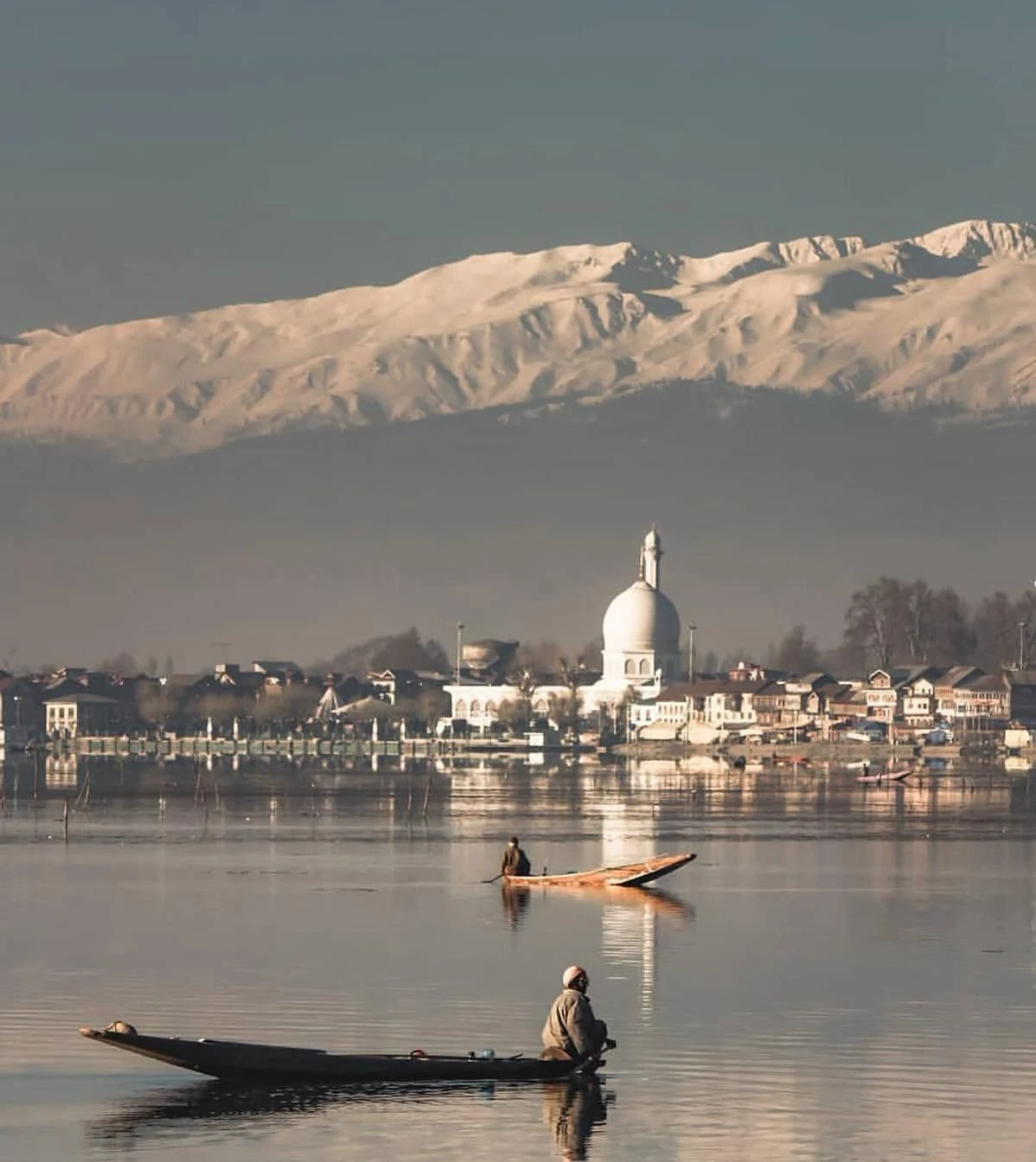
Discover Jammu & Kashmir: The Ultimate Travel Guide to Paradise on Earth
Welcome to Jammu & Kashmir (J&K). Famously described as “Agar firdaus bar roo-e zameen ast, Hameen ast-o hameen ast-o hameen ast” (If there is a heaven on earth, it is here, it is here, it is here). From the spiritual peaks of Katra to the romantic Dal Lake and the adrenaline-pumping ski slopes of Gulmarg, J&K is a mesmerizing blend of Sufi culture, alpine forests, and pristine glaciers.
Here is your comprehensive, professional, place-by-place itinerary and guide to exploring the Crown of India.
State Overview: At a Glance
- Culture & People: J&K is a beautiful mosaic of Dogra culture in Jammu and Kashmiri Sufi culture in the valley. The people are incredibly warm, deeply hospitable, and take immense pride in hosting guests (Kashmiriyat).
- Traditional Cuisine:
- Wazwan: A magnificent 36-course traditional feast featuring mostly meat dishes like Rogan Josh, Gushtaba, and Tabakh Maaz.
- Beverages: Kahwa (saffron-infused green tea with crushed almonds) and Noon Chai (traditional pink salty tea).
- Traditional Dress: The iconic Pheran (a long, loose woollen cloak) is worn by both men and women, especially in winter. Women often wear intricate silver jewelry and a traditional headpiece called a Kasaba or Taranga.
- Festivals: Tulip Festival (held in April in Srinagar when a million tulips bloom), Shikara Festival, Navroz, Eid, and Maha Shivratri (locally celebrated as Herath by Kashmiri Pandits).
- Best Time to Visit:
- Spring/Summer (March to June): Perfect for blooming gardens, green valleys, and pleasant family trips.
- Autumn (October to November): Witness the spectacular golden-orange Chinar leaves.
- Winter (December to February): For snowfall, skiing, and frozen waterfalls.
- How to Reach from Delhi:
- By Air: Direct flights from New Delhi (DEL) to Sheikh ul-Alam International Airport, Srinagar (SXR), or Jammu Airport (IXJ). (Approx. 1.5 hours).
- By Train: The Vande Bharat Express from New Delhi reaches Shri Mata Vaishno Devi Katra in just 8 hours. From Katra or Jammu, you can take a scenic taxi ride (or the upcoming direct train) to Srinagar.
The Ultimate Road Trip Guide (Car & Bike)
Driving or riding from Delhi to Kashmir is one of the most dramatic highway transitions in India—shifting from the flat, bustling plains of Punjab to the towering, pine-covered peaks of the Pir Panjal range.
The primary artery connecting Delhi to Srinagar is National Highway 44 (NH44), covering a total distance of approximately 800 to 850 km.
Here is your master plan for the road, customized by your travel style:
1. Route Planning by Travel Style
You MUST break this 18 to 20-hour drive into two days. Attempting it in a single day is dangerous due to mountain fatigue and unpredictable highway traffic.
- The Family Trip (Focus: Safety, Comfort, and Good Rest):
- Route: Delhi -> Panipat -> Ludhiana -> Jalandhar -> Pathankot (Night Halt) -> Jammu -> Udhampur -> Chenani-Nashri Tunnel -> Banihal Tunnel -> Srinagar.
- Strategy: Stop at Pathankot on Day 1 (approx. 480 km, 8 hours). It offers excellent family hotels and allows you to cross the J&K border fresh the next morning. It keeps the driving hours relaxed for children and the elderly.
- The Boys’ Trip / Adventure Riders (Focus: Thrill and Scenery):
- Route A (The Fast Push): Delhi -> Ludhiana -> Pathankot -> Jammu (Night Halt). Day 2: Jammu -> Patnitop -> Srinagar. (Stopping in Jammu allows you to push deeper on Day 1, leaving a shorter mountain ride for Day 2).
- Route B (The Mughal Road – Summer Only): Delhi -> Jammu (Night Halt) -> Rajouri -> Peer Ki Gali Pass -> Shopian -> Srinagar.
- Why Route B? The historic Mughal Road is a biker’s dream. It bypasses the heavy truck traffic of the main highway, taking you through untouched, breathtaking alpine landscapes. Note: Only open from May to November.
2. Fuel Strategy & Best Halts
- Plains (Delhi to Pathankot): Fuel stations are available every few kilometers.
- Food Halts: Amrik Sukhdev Dhaba (Murthal) for parathas; Haveli (Jalandhar) for an authentic Punjabi lunch.
- The Border (Lakhanpur): Stop at Lakhanpur (the entry point to J&K) to eat their famous roadside Pahadi Bhalle. Tank up your vehicle here or in Jammu city.
- The Mountains (Jammu to Srinagar): Fuel stations become sparser in the hills.
- Crucial Fuel Stops: Always top up at Udhampur and Banihal. Do not let your tank drop below the halfway mark in the mountains, as landslide-induced traffic jams can leave you stranded for hours with the heater/AC running.
3. Police Check Posts, Security & Permits
- Permits: Indian citizens DO NOT need an Inner Line Permit (ILP) to enter Jammu or Srinagar. (Permits are only required later if you visit border areas like Gurez).
- Vehicle Documents (The “De-facto Permits”): The J&K police are extremely strict. You will be stopped. You MUST carry physical or DigiLocker copies of:
- Valid Driving License & RC (Registration Certificate).
- Valid PUC (Pollution Under Control) certificate (Heavy fines if missing).
- Active Insurance.
- Major Check Posts:
- Lakhanpur Toll Plaza: The official entry border. Routine checking of trunks/saddlebags.
- Ramban & Banihal: Highway patrol checks for security.
- Lower Munda Toll Plaza: The gateway as you exit the tunnel and enter the Kashmir Valley. Expect thorough security scans here.
- The Telecom Rule (CRITICAL): Your prepaid SIM card from Delhi/Haryana/UP will instantly die the moment you cross Lakhanpur. You must have a Postpaid connection (Jio, Airtel, or BSNL) for GPS and emergency calls, otherwise, you will be riding blind.
4. The Budget: Fuel & Toll Estimates (Delhi to Srinagar One-Way)
Fuel prices vary slightly, calculated at approx ₹100/liter. Tolls are subject to standard NHAI updates.
- For Cars (Sedan/SUV):
- Fuel Estimate: Assuming an average of 15 km/l for 850 km = ~56 Liters. Cost: ₹5,600.
- Toll Taxes: The NH44 is heavily tolled in Punjab and features premium mountain tunnels (Chenani-Nashri and Navayuga Banihal tunnels). Toll Cost: ₹1,300 to ₹1,600.
- Total 1-Way Driving Cost: ~₹7,000 – ₹7,200.
- For Motorcycles (Riders):
- Fuel Estimate: Assuming an average of 30 km/l for 850 km = ~28 Liters. Cost: ₹2,800.
- Toll Taxes: ₹0 (Two-wheelers are exempt from tolls on Indian National Highways).
- Total 1-Way Riding Cost: ~₹2,800.
Essential Highway Precautions
- The Ramban-Banihal Stretch: This 40 km stretch of the highway is notorious for sudden landslides and “shooting stones” (falling rocks), especially during rain. If riding a bike, always wear a certified helmet and protective gear, and try to cross this stretch in the early morning before the mountain heats up and loosens the soil.
- Tunnel Etiquette: The Chenani-Nashri (9 km) and Banihal-Qazigund (8.5 km) tunnels are engineering marvels. Speed cameras are highly active inside. Stick strictly to the 50 km/h speed limit and do not overtake inside the tunnels.
- Winter Driving: If driving between late December and February, snow chains are highly recommended once you cross Patnitop. If it snows heavily, the traffic police will halt 2-wheelers at Udhampur for safety.
1. Srinagar: The Summer Capital & The City of Lakes
The heart of the Kashmir valley, Srinagar is a romantic, historic city defined by its serene lakes, floating gardens, and magnificent Mughal architecture.
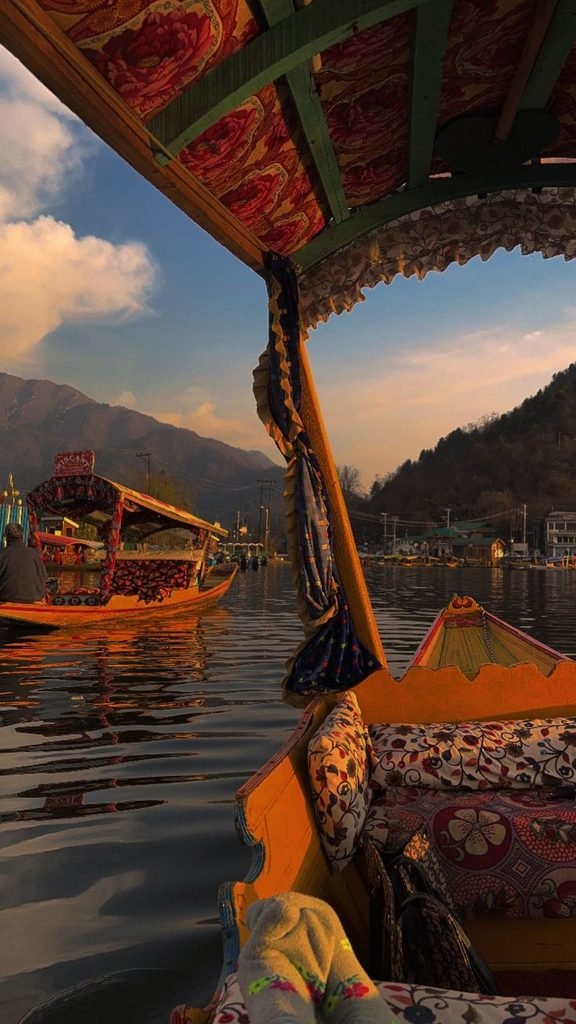
- Why Go & Famous For: The iconic Dal Lake, wooden houseboats, vibrant Shikara rides, and the impeccably manicured Mughal Gardens built by Emperor Jahangir.
- Infant & Family Suitability: Highly Recommended. Excellent medical facilities, flat plains, zero trekking required, and immensely family-friendly activities.
- Key Spots:
- Family & Leisure: Dal Lake, Nigeen Lake (quieter than Dal), Shalimar Bagh, Nishat Bagh, and Indira Gandhi Memorial Tulip Garden (Asia’s largest).
- Spiritual: Hazratbal Shrine (housing a relic of Prophet Muhammad) and the ancient Shankaracharya Temple (dedicated to Lord Shiva, perched on a hill).
- Wildlife/Forests: Dachigam National Park (22 km away) – Home to the critically endangered Hangul (Kashmir Stag) and Himalayan Black Bear.
- Sunrise & Sunset Highlights:
- Sunrise: The Floating Vegetable Market on Dal Lake at 5:00 AM. (You must take an early morning Shikara to witness this bustling, chaotic, and colorful market on the water).
- Sunset: Pari Mahal (The Palace of Fairies) offers a spectacular, elevated sunset view over Dal Lake and the entire Srinagar city.
- Where to Eat & Famous Cafes: Chai Jaai (an aesthetic, Instagram-worthy tea room), Ahdoos (historic restaurant serving the best authentic Wazwan since 1918), and Mughal Darbar.
- Shopping: Lal Chowk and Polo View Market. Buy authentic Pashmina shawls, intricate Walnut wood carvings, Papier-mâché artifacts, and pure Pampore Saffron.
- Accommodation Tiers & Budget (Per Person/Day):
- Budget (₹1,500 – ₹2,500): Backwater Houseboats on Dal Lake, Zostel Srinagar.
- Mid-Range (₹4,500 – ₹8,000): Premium Houseboats on Nigeen Lake, Radisson Srinagar.
- Luxury (₹18,000+): Taj Vivanta Dal View (perched on a hill), The Lalit Grand Palace (a former royal residence).
2. Gulmarg: The Meadow of Flowers & Winter Sports Capital
Located at 8,600 feet, Gulmarg transforms from a lush meadow of daisies in the summer to India’s premier skiing destination in the winter.
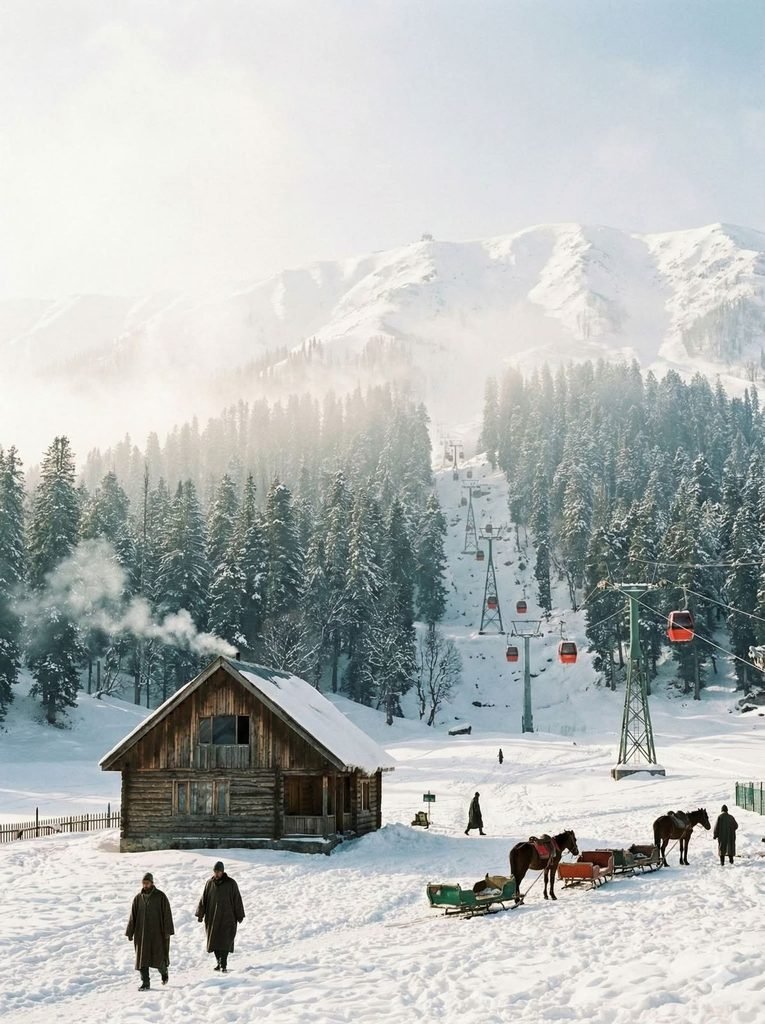
- Why Go & Famous For: Home to the Gulmarg Gondola (one of the highest cable cars in the world, reaching 13,000+ feet), world-class skiing, and the highest green golf course in the world.
- Infant & Family Suitability: Great for families, but Phase 2 of the Gondola (Apharwat Peak) is NOT newborn-friendly due to extreme altitude (13,780 ft), freezing winds, and thin air. Infants should stay at the base meadow or Phase 1.
- Key Spots:
- Adventure: Gulmarg Gondola (Phase 1: Kongdoori, Phase 2: Apharwat), Skiing, snowboarding, and ATV rides.
- Nature/Waterfalls: Drung Waterfall (A stunning waterfall just outside Gulmarg that completely freezes into massive icicles in January).
- Spiritual/Heritage: St. Mary’s Church (a century-old British church standing alone in the meadow) and Maharani Temple.
- Sunrise & Sunset Highlights:
- Sunrise: Trek or ski early to Apharwat Peak to watch the sun illuminate the Nanga Parbat (the 9th highest peak in the world).
- Sunset: From the Gulmarg Golf Course or Phase 1 Gondola returning base.
- Where to Eat & Famous Cafes: Highland Park Lounge (vintage wooden bar/lounge with a massive fireplace), Igloo Cafe (India’s first glass igloo/snow cafe, operational only in deep winter).
- Accommodation Tiers & Budget (Per Person/Day):
- Budget (₹1,500 – ₹3,000): Stay in Tangmarg (13 km below Gulmarg) in basic local homestays.
- Mid-Range (₹6,000 – ₹9,000): Pine Palace Resort, Hotel Heevan Retreat.
- Luxury (₹25,000+): The Khyber Himalayan Resort & Spa (World-renowned luxury with heated indoor pools overlooking the snow).
3. Pahalgam: The Valley of Shepherds
Nestled at the confluence of the streams flowing from Sheshnag Lake and the Lidder River, Pahalgam is visually spectacular, featuring dense pine forests, rushing rivers, and vast green valleys.
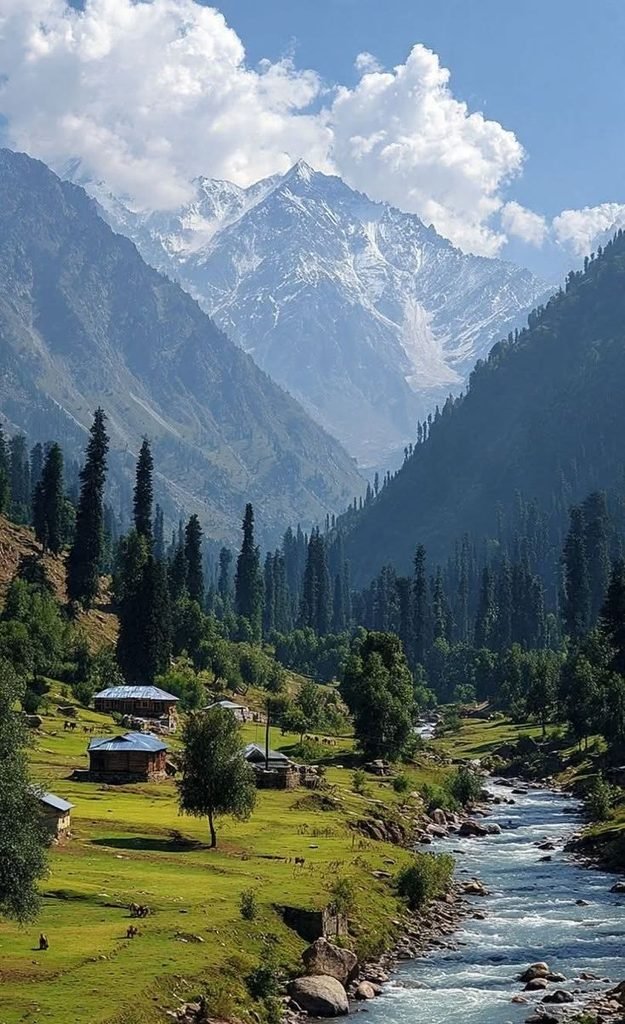
- Why Go & Famous For: It is the quintessential Bollywood shooting location (famous for the movie Betaab). It offers pristine river valleys and acts as the traditional starting point for the holy Amarnath Yatra.
- Infant & Family Suitability: Excellent. Very relaxed, incredibly scenic, and offers easy pony rides for kids.
- Key Spots:
- Family/Valleys: Betaab Valley (lush green meadows and crystal-clear streams), Aru Valley (a quaint village offering immense peace), and Baisaran (dubbed “Mini Switzerland”, reachable via a pony ride or a steep hike through pine forests).
- Spiritual: Mamleshwar Temple (an ancient 12th-century Shiva temple) and the basecamp for the Amarnath Cave trek.
- Sunrise & Sunset Highlights:
- Sunrise: Watch the morning light hit the dew-soaked meadows at Baisaran.
- Sunset: Sit on the boulders along the banks of the Lidder River as the sun dips behind the towering pine forests.
- Where to Eat & Famous Cafes: Troutbeat (an absolute must-visit for fresh, pan-fried Himalayan Trout fish), Dana Pani (excellent pure vegetarian food).
- Shopping: Buy authentic Kashmiri cricket bats (made from Kashmir Willow) on the highway between Srinagar and Pahalgam.
- Accommodation Tiers & Budget (Per Person/Day):
- Budget (₹1,500 – ₹2,500): Local guesthouses and backpacker hostels near the main market.
- Mid-Range (₹5,000 – ₹8,000): Hotel Heevan, Royal Hilton Pahalgam.
- Luxury (₹18,000+): Welcomhotel Pine-N-Peak (the only premier 5-star property in the valley, positioned perfectly on a ridge).
4. Sonamarg: The Meadow of Gold & Glaciers
Located at 9,000 feet on the Srinagar-Ladakh highway, Sonamarg is a raw, rugged, and breathtaking alpine valley surrounded by glaciers.
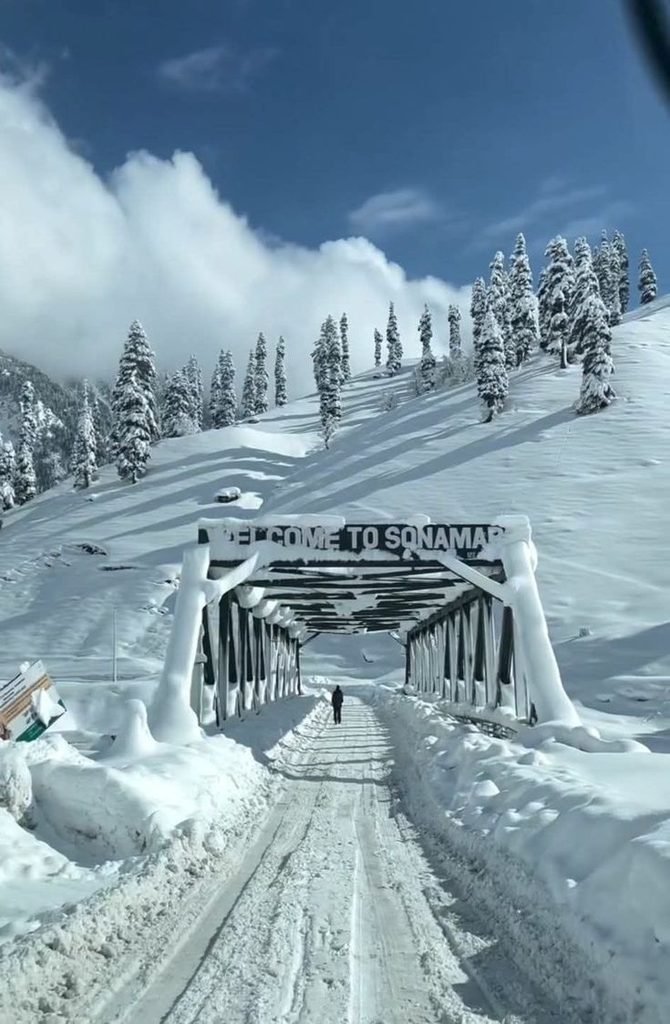
- Why Go & Famous For: Massive glaciers you can walk up to, sprawling alpine lakes, and its proximity to the treacherous Zojila Pass.
- Infant & Family Suitability: Good for summer, but Not recommended for winter or for newborns. The weather is highly unpredictable, the wind is harsh, and medical facilities are very basic.
- Key Spots:
- Adventure/Glaciers: Thajiwas Glacier (A 3 km trek or pony ride from the main town brings you directly to snow and ice, even in summer).
- Offbeat/Waterfalls: Zero Point near Zojila Pass (a thrilling drive requiring a sturdy 4×4, leading to stunning snowscapes and waterfalls).
- Sunrise & Sunset Highlights:
- Sunrise: The base of the Thajiwas Glacier.
- Sunset: The bridge over the Sindh River offers a gorgeous golden hour.
- Accommodation & Budget (Per Person/Day):
- Budget (₹1,000 – ₹2,000): Alpine tents and basic local dhabas (expect very simple Maggie/Dal-chawal meals).
- Mid-Range (₹4,500 – ₹7,000): Hotel Snowland.
- Luxury (₹12,000+): Rah Villas, The Radisson Sonamarg.
5. Betaab Valley: The Bollywood Meadow of Kashmir
Nestled between the towering Pir Panjal and Zanskar mountain ranges, just 7 kilometers from the main town of Pahalgam, Betaab Valley is one of the most picturesque and well-maintained ticketed nature parks in the entire Kashmir region. Originally known as Hajan Valley, it was officially renamed after serving as the spectacular backdrop for the blockbuster 1983 Bollywood film Betaab (starring Sunny Deol and Amrita Singh).
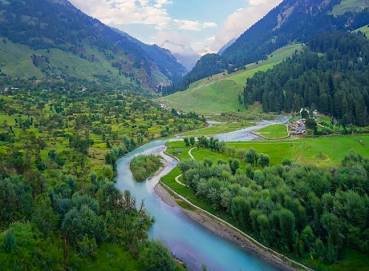
Today, it stands as a flawless, manicured expanse of green meadows, tall Deodar and Pine forests, and the crystal-clear Lidder River carving directly through its center.
Why You Should Go & Famous For: If you want the quintessential “Kashmir Valley” photograph, this is the place. While some offbeat travelers prefer wild, unmanaged trails, Betaab Valley offers a perfectly curated slice of Himalayan beauty. It is famous for its wooden suspension bridges crossing the streams, lush willow trees, and pristine walking paths.
Best Season:
- April to October: The absolute best time for lush, vibrant green meadows and pleasant weather.
- December to February: For travelers wanting to see the valley completely frozen and blanketed in thick white snow.
Infant & Family Suitability:Highly Recommended. This is arguably the most family-friendly spot in Pahalgam. Unlike the rugged trails of Aru or Chandanwari, Betaab is a flat, protected park with gentle walking trails, gazebos, and wooden bridges. It requires absolutely no trekking, making it perfect for infants in strollers, toddlers, and elderly travelers.
The Experience: Spots, Sunsets & Food
Key Spots & Activities:
- The Deep Walk: The entrance gets crowded very quickly. The best advice is to walk past the first 200 meters and the main wooden bridge. Deep inside the valley, the crowds thin out, leaving you alone with the rushing river and towering pines.
- Adventure: Zip-lining across the river is available near the entrance. You can also take guided pony rides around the perimeter of the forest, though the valley is small enough to easily explore on foot.
Sunrise & Sunset Points: Because it is a deep valley floor surrounded by massive peaks, you won’t see a direct horizon sunrise or sunset. However, the Golden Hour (around 4:00 PM to 5:00 PM) is spectacular. The late afternoon sun filters through the pine canopy, illuminating the Lidder River in brilliant gold—a photographer’s dream.
Where to Eat & Cafes: To protect the ecosystem, heavy commercialization and luxury cafes are not permitted inside the valley. However, there is a designated cafeteria area near the entrance serving piping hot Kahwa, Maggi, pakoras, and basic snacks. For full meals, you will need to head back to Pahalgam town.
Shopping & Local Souvenirs: Photographers wearing traditional Kashmiri attire roam the valley. You can rent a Pheran (traditional cloak) and get professional, instant-print photographs against the stunning backdrop (approx. ₹150 – ₹200 per photo). Small stalls outside the entry gate sell wooden souvenirs and snacks.
Critical Precaution: The Pahalgam Taxi Union Rule
If you are planning to visit Betaab Valley, Aru Valley, or Chandanwari, you MUST know about the local transport monopoly. It is the number one thing that catches tourists off guard.
- Outside Cabs Are Banned for Local Sightseeing: If you hired a commercial taxi from Srinagar or the airport, that cab is NOT allowed to take you to Betaab Valley. The Srinagar driver can only drop you at your hotel in Pahalgam.
- The Local Union Cab: To visit Betaab Valley, you must go to the Pahalgam Taxi Stand and hire a designated Union Taxi.
- The Cost (2026 Updated Rates):
- For a combined ABC trip (Aru, Betaab, and Chandanwari), the Union rate is strictly fixed between ₹2,100 to ₹3,000 depending on the vehicle (Eeco to Innova Crysta).
- If you only want to visit Betaab Valley, the return fare is between ₹1,000 to ₹1,600.
- Time Limits: The standard union cab fare includes exactly 1 hour of waiting time at Betaab Valley. If you wish to stay longer, the union rules mandate an extra charge of ₹400 per additional hour.
(Note for Riders: If you are riding your own private motorcycle or driving a personal “White Number Plate” car, you are legally allowed to drive to Betaab Valley yourself, though navigating the local traffic checks during peak summer season requires patience).
6. Katra & Jammu: The Spiritual Epicenter & City of Temples
Located in the Jammu region, this area transitions from the plains to the rugged Trikuta Mountains, steeped in profound Hindu mythology.
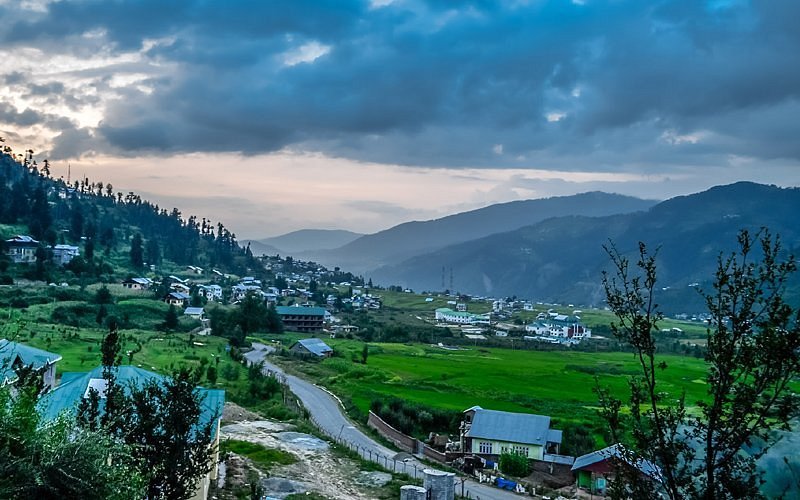
- Why Go & Famous For: The world-famous Shri Mata Vaishno Devi Shrine, which draws millions of pilgrims annually.
- Infant & Family Suitability: Highly suitable. The trek to Vaishno Devi is entirely paved, covered, and offers battery cars, ropeways, and palanquins, making it accessible for infants and the elderly.
- Key Spots:
- Spiritual: Vaishno Devi Bhavan, Bhairon Nath Temple (accessible via a steep ropeway), and Raghunath Temple in Jammu.
- Heritage: Bahu Fort in Jammu, overlooking the Tawi river.
- Waterfalls/Caves: Shiv Khori (a magnificent natural cave shrine dedicated to Lord Shiva, about 70 km from Katra).
- Accommodation & Budget (Per Person/Day):
- Budget (₹500 – ₹1,500): Shrine Board Ashrams (excellent, clean, and highly subsidized) and local Katra lodges.
- Mid-Range (₹3,000 – ₹5,000): The White Hotels, Lemon Tree Katra.
- Luxury (₹10,000+): Taj Vivanta Katra, Welcomhotel by ITC Katra.
Traveler Advisory: Do’s, Don’ts & Precautions
Critical Precautions:
- The SIM Card Rule: Prepaid SIM cards from outside J&K DO NOT work here due to security reasons. You must either have a Postpaid connection (Jio, Airtel, or BSNL) or buy a local tourist prepaid SIM at the Srinagar airport by showing your Aadhaar card.
- Security & Military: There is a heavy presence of the Indian Army and CRPF for civilian safety. DO NOT photograph military installations, bunkers, or convoys. Always carry your original physical ID (Aadhaar/Passport).
- Weather Unpredictability: Even in peak summer, it can rain and the temperature drops drastically. Always carry a heavy jacket, thermal wear, and waterproof trekking shoes.
Do’s and Don’ts:
- DO negotiate politely for Shikara rides and pony rides (refer to the official rate boards displayed by the tourism department).
- DON’T drink tap water. Stick to bottled mineral water or boiled water, especially on treks or in remote areas.
- DO respect the local culture. J&K is a conservative state with deep religious roots (both Islamic and Hindu). Dress modestly—avoid very short clothes when visiting local markets, shrines, or remote villages. Always cover your head when entering a Dargah or Temple.
- DON’T venture off the designated tourist trails in places like Gulmarg or Sonamarg during winter without a registered local guide, as avalanches in the backcountry are a real risk.
Beyond Gulmarg: 3 Highly Underrated, Hidden Gems in Jammu & Kashmir (Complete 2026 Guide)
When travelers think of Jammu and Kashmir, they usually default to the same overcrowded itinerary: Srinagar, Gulmarg, Pahalgam, and Sonamarg. But what if you want to escape the massive tourist crowds, the overpriced gondola rides, and the commercialized viewpoints?
Here at The Valley of Depth, we specialize in finding the silence that commercial tourism left behind. If you want to experience the raw, authentic, and untouched beauty of Kashmir, you need to head off the grid. Here are the three most underrated, hidden gems in J&K, complete with how to get there from Delhi, exact budgets (Budget, Mid-range, and Luxury), and family travel advice.
1. Gurez Valley: The Forgotten Frontier
Located right along the Line of Control (LoC), Gurez Valley was closed to tourists for decades. It only recently opened up, making it one of the most pristine, unexplored regions in India. It feels like stepping back in time—you’ll find traditional log houses, the roaring turquoise Kishenganga River, and the razor-sharp peak of Habba Khatoon looming over the valley.
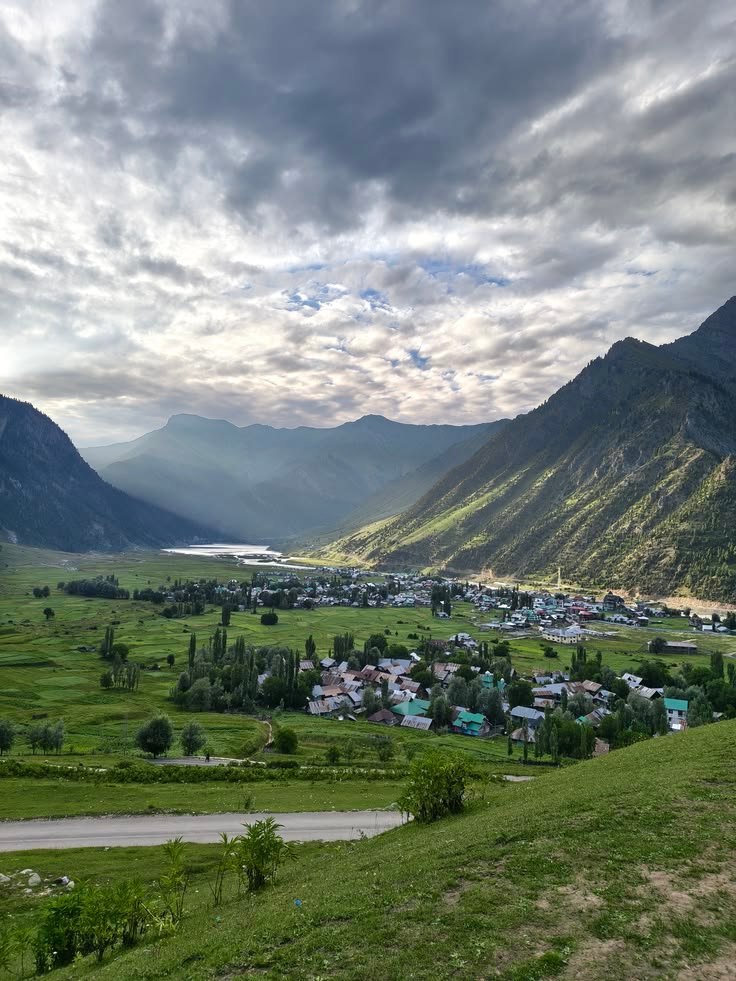
- Best Season: June to September. The Razdan Pass (the only way in) is completely buried in snow and closed for the rest of the year.
- Family & Newborn Friendly? It is great for older children, but NOT recommended for newborns or toddlers. The altitude is high (8,000+ ft), the 6-hour drive from Srinagar is incredibly bumpy, and immediate pediatric medical facilities are practically non-existent.
- Route & Transport from Delhi:
- By Flight: Delhi -> Srinagar (1.5 hours).
- By Train: Delhi -> Jammu Tawi -> Shared cab to Srinagar.
- Srinagar to Gurez: From Srinagar, hire a private taxi or take a shared Sumo from Parimpora bus stand to Bandipora, and then onward to Dawar (the main town in Gurez) via the Razdan Pass. It is a 125 km (6 to 7 hour) drive.
The Budget & Stay Breakdown (Per Person for 4 Days from Delhi):
- Budget-Friendly (₹10,000 – ₹12,000): Travel via sleeper class train to Jammu and shared Sumos. Stay in basic local homestays or the JKTDC Tourist Bungalow (₹1,000/night). Cafe/Food: Eat at local dhabas in Dawar market—enjoy Maggi, Tsot (local bread), and Nun Chai.
- Mid-Budget (₹18,000 – ₹22,000): Travel via economy flight to Srinagar and a private hatchback taxi. Stay in comfortable properties like Kaka Palace Guest House or Wood Vibes (₹2,500 – ₹3,500/night). Cafe/Food: Eat at the in-house dining of your guesthouse or Noor Cafe in Dawar for standard North Indian meals.
- Luxury (₹30,000+): Travel via flight and a private Innova/SUV. Traditional 5-star luxury doesn’t exist here, but you can book premium “glamping” luxury wooden cottages like Gurez Knights (₹6,000+ per night). Cafe/Food: Premium customized meals arranged privately by your glamping host.
2. Bangus Valley: The Secret Meadow
If you want the rolling, alpine meadows of Gulmarg without the hundreds of horses and tourists, Bangus Valley in the Kupwara district is your destination. Divided into Bod Bangus (Big Bangus) and Lakut Bangus (Small Bangus), it is surrounded by dense pine forests and fed by crystal-clear streams.
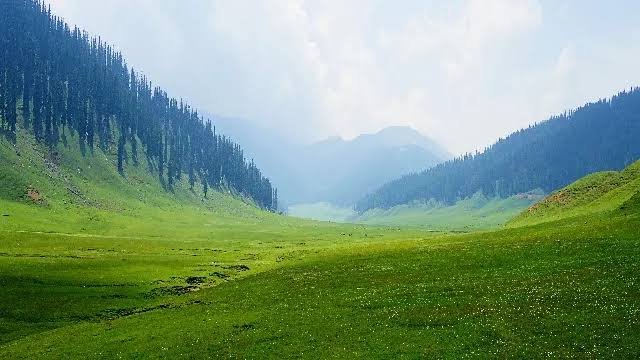
- Best Season: May to October. The summer wildflowers are stunning.
- Family & Newborn Friendly? No. Reaching the main meadows requires hiring local 4x4s for off-roading, followed by a short trek. It is strictly for fit adults and older teenagers.
- Route & Transport from Delhi:
- By Flight: Delhi -> Srinagar.
- Srinagar to Bangus: Drive from Srinagar to Handwara, then to Reshwari (about 3 hours). From Reshwari, you must hire a local 4×4 vehicle to reach the base of Bangus, followed by a trek into the meadows.
The Budget & Stay Breakdown (Per Person for 4 Days from Delhi):
- Budget-Friendly (₹9,000 – ₹11,000): Travel via train and shared cabs. Stay by pitching your own tent in the meadows or finding a basic ₹800/night room in Reshwari village. Cafe/Food: No cafes exist here. Rely entirely on local bakeries (Kandur) in Handwara for packed bread and carry your own trekking food.
- Mid-Budget (₹16,000 – ₹19,000): Travel via flight and private cab to Reshwari. Stay at the JKTDC Reshwari guest house (approx. ₹2,000/night) which sits beautifully right next to the Mawar river. Cafe/Food: Eat authentic Kashmiri Wazwan at local restaurants in Handwara town before heading up.
- Luxury (₹35,000+): Since there are no luxury hotels in Bangus, the “luxury” way to do this is to book a 5-star property in Srinagar or Baramulla (like The Khyber or Taj Vivanta) and hire a premium private outfitter to arrange a guided, fully catered luxury day-trip to Bangus in a high-end SUV.
3. Chatpal: The Village With No Roads
Tucked away in the Anantnag district of South Kashmir, Chatpal is the definition of an offbeat escape. It lacks heavy commercialization, mobile networks are incredibly spotty, and there are barely any paved roads. It is just you, apple orchards, yellow mustard fields, and the sound of mountain streams.
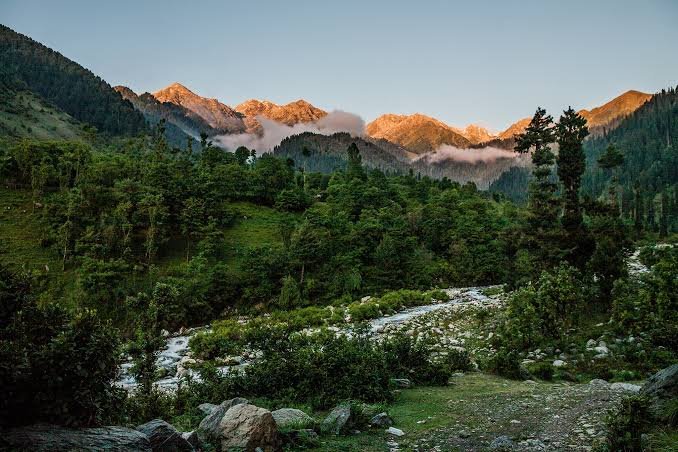
- Best Season: April to June (for spring greenery) and September to November (for autumn colors).
- Family & Newborn Friendly? Yes, it is very peaceful. However, because it is remote and lacks instant medical infrastructure, we advise parents of newborns to exercise caution. It is highly recommended for families wanting a quiet digital detox.
- Route & Transport from Delhi:
- By Flight: Delhi -> Srinagar.
- Srinagar to Chatpal: Drive from Srinagar toward Anantnag on the Jammu-Srinagar highway. Take the diversion from Achabal to Chitergul, and hire a local jeep for the final bumpy ride into Chatpal. Total drive is about 3-4 hours (90 km).
The Budget & Stay Breakdown (Per Person for 3-4 Days from Delhi):
- Budget-Friendly (₹10,000 – ₹13,000): Train to Jammu, shared cab to Anantnag. Stay in basic local village homestays (₹1,000/night). Cafe/Food: Eat home-cooked Kashmiri meals with your host family.
- Mid-Budget (₹17,000 – ₹20,000): Flight to Srinagar, private cab to Chatpal. Stay at the JKTDC Tourist Bungalow in Chatpal (₹1,500 – ₹2,500/night). It is well-maintained and sits right next to the forest. Cafe/Food: The caretaker at the JKTDC bungalow will cook fresh, customized meals for you (chicken curry, dal, rice).
- Luxury (₹28,000+): Like Bangus, Chatpal has zero luxury resorts. The luxury alternative is to book a premium resort in nearby Pahalgam (like Welcomhotel by ITC or Pahalgam Hotel at ₹15,000+/night) and take a luxurious private day trip to Chatpal to enjoy the silence before returning to your heated pool.
Stay curious and keep exploring with The Valley of Depth.
Three More Uncharted Territories in Jammu & Kashmir
If you have already crossed Gurez and Bangus off your list, it is time to dig deeper. From the forgotten meadows of the Jammu division to the most isolated trekking valleys in the Himalayas, here are three more crowd-free destinations that the mainstream travel industry doesn’t want you to know about.
1. Bhaderwah: The “Mini Kashmir” of the Jammu Region
Travelers rush past the Jammu region to get to Srinagar, completely missing Bhaderwah. Located in the Doda district of the Jammu division, it is a saucer-shaped valley surrounded by dense Deodar and Kail forests. It features vast, rolling meadows (like Seoj Meadow and Padri) that rival Pahalgam—but with only a fraction of the tourists.
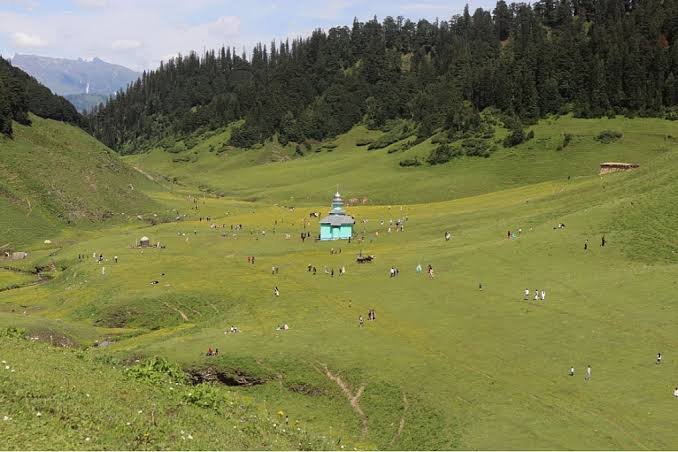
- Best Season: March to November. If you want snow without the chaos of Gulmarg, visit between December and February.
- Family & Newborn Friendly? Yes, highly recommended. Bhaderwah sits at a very comfortable 5,300 feet. The roads from Jammu are generally excellent, making it incredibly safe and accessible for newborns, toddlers, and senior citizens.
- Route & Transport from Delhi:
- By Flight/Train: Delhi -> Jammu Airport or Jammu Tawi Railway Station.
- Jammu to Bhaderwah: Hire a private taxi or take a JKSRTC bus from Jammu. It is a highly scenic 200 km drive (approx. 6 hours) via the Patnitop-Chenani Nashri Tunnel route.
The Budget & Stay Breakdown (Per Person for 4 Days from Delhi):
- Budget-Friendly (₹8,000 – ₹10,000): Travel via sleeper class train to Jammu and shared Sumos to Bhaderwah. Stay in basic guesthouses near the main bus stand (₹800 – ₹1,200/night). Cafe/Food: Eat at local dhabas in Bhaderwah market—try the famous Rajma Chawal of the Jammu region.
- Mid-Budget (₹15,000 – ₹18,000): Travel via flight to Jammu and a private sedan taxi. Stay at the JKTDC Tourist Bungalow or Hotel Doda Darbar (₹2,500 – ₹3,500/night). Cafe/Food: Eat at your hotel’s in-house restaurant or Cafe 99 in town for great coffee and North Indian meals.
- Luxury (₹28,000+): Fly to Jammu and hire a private Innova Crysta for the entire trip. Stay at premium properties like The Highness or book the government-run luxury Igloo Huts at Khellani/Jai Valley (₹5,000+). Cafe/Food: Enjoy premium, customized local Dogri and Kashmiri fusion cuisine arranged by your high-end hotel.
2. Lolab Valley: The Golden Agricultural Bowl
Located in the far north of Kashmir (Kupwara district), Lolab Valley—locally known as Wadi-e-Lolab—is a completely different vibe from the rest of the state. Instead of jagged, snowy peaks, you get wide, gentle landscapes filled with endless paddy fields, apple orchards, walnut trees, and traditional wooden villages. It is rural slow-travel at its absolute best.
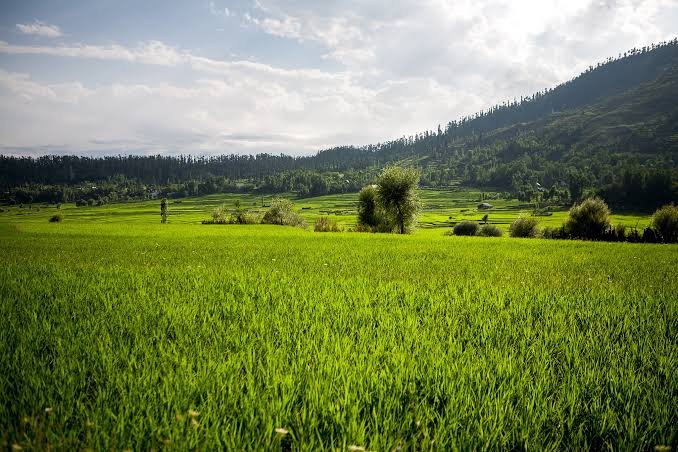
- Best Season: May to October. If you visit in September or October, the paddy fields turn a brilliant, photogenic gold, and the apple harvest begins.
- Family & Newborn Friendly? Yes. It is a gentle landscape with low altitude and easy access. It is a fantastic, safe day trip or overnight stay for families with young infants.
- Route & Transport from Delhi:
- By Flight: Delhi -> Srinagar.
- Srinagar to Lolab: Drive from Srinagar -> Handwara -> Kupwara -> Lolab Valley. It is about 130 km (4 to 5 hours). The roads are mostly flat and well-maintained.
The Budget & Stay Breakdown (Per Person for 3-4 Days from Delhi):
- Budget-Friendly (₹10,000 – ₹12,000): Train to Jammu, shared cabs to Srinagar, and another shared cab to Kupwara. Stay in very basic rural homestays (₹1,000/night). Cafe/Food: No aesthetic cafes here. Drink Noon Chai (pink salty tea) and eat fresh local bread from the village Kandur (bakery).
- Mid-Budget (₹17,000 – ₹20,000): Flight to Srinagar and a private hired taxi. Stay at the JKTDC Tourist Bungalow in Chandigam (₹2,000 – ₹3,000/night), which is beautifully located right in the middle of the pine forests. Cafe/Food: The caretaker at the JKTDC property will cook fresh, hot Wazwan or vegetarian thalis upon request.
- Luxury (₹30,000+): Because Lolab is so untouched, brick-and-mortar luxury hotels do not exist here. The luxury option is to stay in a 5-star heritage houseboat on Nigeen Lake in Srinagar (₹12,000+/night) and hire a premium SUV for a fully catered, luxurious day-trip to Lolab Valley, returning to Srinagar by sunset.
3. Warwan Valley: The Ultimate Isolation
If you want an adventure that makes Spiti Valley look crowded, Warwan Valley is your destination. Located in the Kishtwar district, this is a deeply isolated, high-altitude valley separated from Kashmir by the treacherous Margan Top pass (14,000 ft). The villages here are entirely made of wood, and the landscape is an explosive mix of roaring rivers, glaciers, and untouched meadows.
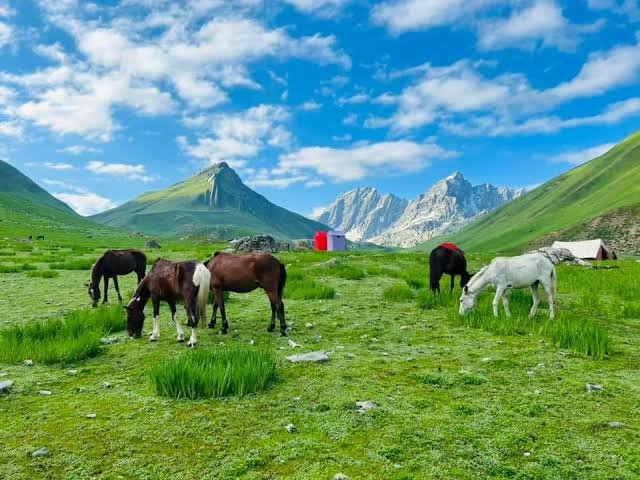
- Best Season: July to September ONLY. The Margan Top pass is completely blocked by heavy snow for the rest of the year.
- Family & Newborn Friendly? ABSOLUTELY NOT. This is a harsh, remote environment. The off-road drive over Margan Top is physically brutal, there is zero mobile network, and the nearest proper hospital is hours away. It is strictly for fit adults, seasoned trekkers, and hardcore adventurers.
- Route & Transport from Delhi:
- By Flight: Delhi -> Srinagar.
- Srinagar to Warwan: Drive from Srinagar to Anantnag -> Kokernag -> Daksum -> ascend the Margan Top pass -> descend into Inshan (the main village of Warwan). It takes about 7-8 hours from Srinagar, and you must hire a sturdy 4×4 vehicle (like a Bolero or Scorpio) from Anantnag.
The Budget & Stay Breakdown (Per Person for 5 Days from Delhi):
- Budget-Friendly (₹13,000 – ₹16,000): Train to Jammu, shared cabs to Anantnag. From Anantnag, you must find a shared local Sumo heading to Inshan (they are rare and run on their own schedule). Stay in local wooden homestays in Inshan (₹800 – ₹1,200/night). Cafe/Food: You eat whatever the local family eats—usually rice, dal, and local greens.
- Mid-Budget (₹22,000 – ₹26,000): Flight to Srinagar. Hire a private 4×4 from Anantnag (approx. ₹4,000 – ₹5,000 per day). Stay in slightly better-equipped homestays or carry your own camping gear to pitch by the river. Cafe/Food: Pack plenty of your own dry snacks, coffee, and instant meals from Srinagar before crossing the pass.
- Luxury (₹45,000+): True luxury in Warwan means hiring a premium trekking expedition company. They will provide you with a luxury 4×4, set up heavy-duty “glamping” tents with real beds inside the valley, and bring a private chef to cook multi-course meals for you in the middle of nowhere.
⚠️ The Valley of Depth Crucial J&K Survival Rules for 2026
Before your readers pack their bags, make sure you put this warning on your website:
- The SIM Card Rule: Prepaid SIM cards from outside J&K DO NOT WORK here. If you have a prepaid Delhi or Mumbai SIM, your phone will go dead the moment you land. You must either upgrade to a Postpaid connection before leaving home, or buy a local tourist SIM card at Srinagar/Jammu airport.
- The Taxi Union Mafia: If you hire a taxi from Srinagar, that taxi is not allowed to do local sightseeing in places like Pahalgam or Gulmarg. You will be forced to park your Srinagar taxi at the hotel and hire another local union taxi for the day. Factor this double-cost into your budget!
Chasing the Quiet Side of Kashmir (Complete 2026 Guide)
If you are tired of fighting for photo spots in Pahalgam or waiting in hours-long queues for the Gulmarg Gondola, you are in the right place. Kashmir is massive, and its most beautiful corners are the ones the commercial tour packages completely ignore.
Here are three more heavily underrated, uncrowded destinations in Jammu and Kashmir. We break down exactly why you need to visit them, how to get there safely from Delhi, and exactly what it will cost.
1. Daksum & Sinthan Top: The 360-Degree Snow Pass
Located in the Anantnag district, Daksum is a tranquil picnic spot surrounded by coniferous forests and the rushing Bringi River. Just a dramatic, winding drive past Daksum lies Sinthan Top—a mountain pass at 12,400 feet connecting the Kashmir valley to the Kishtwar region of Jammu.
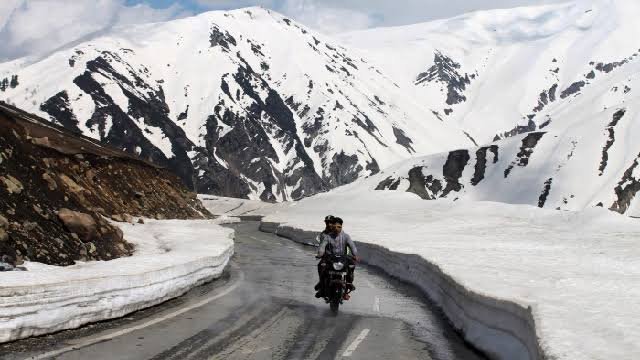
- Why You Should Go There: You get the massive, dramatic snow-capped peaks and glaciers of Gulmarg, but with zero crowds, no cable car queues, and raw, untouched alpine beauty. You can literally pull your car over and step right onto the snow.
- Best Season: April to September. The pass is heavily snowed in and closed during peak winter.
- Family & Newborn Friendly? Daksum (the base valley) is perfectly safe and beautiful for families and infants. However, do not take newborns up to Sinthan Top. The altitude (12,400 ft) is too high for infant lungs and poses a serious risk of altitude sickness.
- Route & Transport from Delhi:
- By Flight: Delhi -> Srinagar (1.5 hours).
- Srinagar to Daksum/Sinthan Top: Drive from Srinagar -> Anantnag -> Kokernag -> Daksum -> Sinthan Top. The total drive to the top is about 130 km (4 hours). The roads are maintained by the BRO and are in excellent condition.
The Budget & Stay Breakdown (Per Person for 3-4 Days from Delhi):
- Budget-Friendly (₹9,000 – ₹11,000): Train to Jammu, shared cabs to Srinagar, and another shared Sumo to Kokernag/Daksum. Stay in basic local guesthouses in Kokernag (₹1,000/night). Cafe/Food: Eat at local roadside dhabas in Kokernag for cheap, authentic Kashmiri Tujj (barbeque skewers).
- Mid-Budget (₹16,000 – ₹19,000): Flight to Srinagar, hire a private sedan cab. Stay at the JKTDC Tourist Bungalow in Daksum (₹2,000 – ₹3,000/night) right next to the forest. Cafe/Food: Eat hot meals prepared by the JKTDC caretaker, or stop at Troutbeat in Kokernag for incredibly fresh local trout fish.
- Luxury (₹32,000+): Base yourself in a premium property in Pahalgam (like Pahalgam Hotel or Welcomhotel by ITC at ₹15,000+/night). Hire a luxury 4×4 SUV from Pahalgam for a private, fully catered day trip to Sinthan Top with packed gourmet picnic baskets.
2. Aharbal Waterfall: The “Niagara of Kashmir”
Tucked away in the Kulgam district, Aharbal is a waterfall first and a hill station second. The Vishaw River, fed by melting glaciers, forces its way through a narrow granite gorge and drops 25 meters with absolutely deafening force.
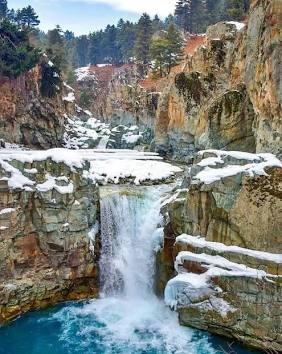
- Why You Should Go There: It is the most powerful, dramatic waterfall in Kashmir. While most of Kashmir is known for calm lakes and silent meadows, Aharbal represents the fierce, untamed power of Himalayan rivers. The surrounding alpine pine forests make it a photographer’s dream.
- Best Season: June to August for maximum water volume and sheer power. September to October for emerald-green water and autumn colors.
- Family & Newborn Friendly? Yes, it is highly family-friendly. The viewpoints are fenced off by the tourism department. Just ensure you hold your children’s hands firmly, as the mist makes the viewing platforms slippery.
- Route & Transport from Delhi:
- By Flight: Delhi -> Srinagar.
- Srinagar to Aharbal: Drive from Srinagar -> Pulwama -> Shopian -> Aharbal. It is a very easy 75 km drive taking about 2.5 hours.
The Budget & Stay Breakdown (Per Person for 3 Days from Delhi):
- Budget-Friendly (₹8,000 – ₹10,000): Train to Jammu, bus to Srinagar, and a shared Sumo from Srinagar to Kulgam, then a local taxi to Aharbal. Stay in basic homestays near Kulgam (₹800/night). Cafe/Food: Small tea stalls near the waterfall serve excellent Maggi, pakoras, and Kahwa (saffron tea).
- Mid-Budget (₹14,000 – ₹17,000): Flight to Srinagar and a private hired cab. Stay in the JKTDC Aharbal Huts (₹2,500/night), which are located beautifully close to the falls. Cafe/Food: There is a local cafeteria run by the tourism department serving standard North Indian thalis and Kashmiri dishes.
- Luxury (₹28,000+): Stay in a luxury boutique hotel in Srinagar (like Qayaam Gah or Dar-es-Salam) and hire a premium AC SUV for an incredibly comfortable, scenic day trip down the Mughal Road to Aharbal.
3. Yusmarg: The Meadow of Jesus
Located in the Budgam district, Yusmarg translates to “The Meadow of Jesus” (local legends claim Jesus visited this valley). It is a sprawling, incredibly lush green pasture surrounded by dense pine and fir forests, with the Doodh Ganga river running right past it.
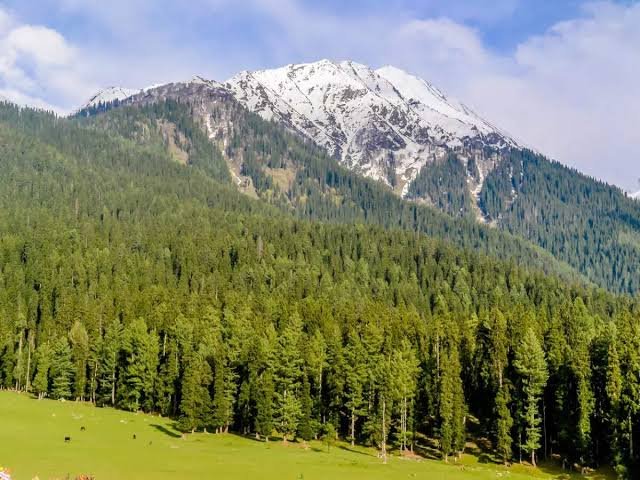
- Why You Should Go There: If you want the lush green, open meadows of Pahalgam or Gulmarg but without the screaming tourists, hawkers, and commercialized horse-rides, Yusmarg is the answer. It is the perfect place to lay down a blanket, read a book, and listen to the river.
- Best Season: April to October. The spring greenery is unmatched.
- Family & Newborn Friendly? Absolutely. The altitude is comfortable, the drive from Srinagar is short and smooth, and the wide-open meadows are perfect for young children to safely run around.
- Route & Transport from Delhi:
- By Flight: Delhi -> Srinagar.
- Srinagar to Yusmarg: Drive from Srinagar via Charar-e-Sharief. It is only 47 km from Srinagar and takes less than 2 hours.
The Budget & Stay Breakdown (Per Person for 3 Days from Delhi):
- Budget-Friendly (₹7,500 – ₹9,500): Train to Jammu, shared cabs to Srinagar. Take a local bus from Srinagar to Charar-e-Sharief, and a shared cab to Yusmarg. Stay in basic budget huts outside the main meadow (₹1,000/night). Cafe/Food: Eat at the small tin-roofed dhabas near the parking lot for cheap local curries and parathas.
- Mid-Budget (₹13,000 – ₹16,000): Flight to Srinagar and a private taxi. Stay at the JKTDC Tourist Bungalow Yusmarg (₹2,500/night). Cafe/Food: The JKTDC restaurant is the most reliable place to eat here, offering decent chicken curries, rice, and dal.
- Luxury (₹25,000+): Because Yusmarg is an eco-sensitive zone, massive luxury resorts aren’t allowed to be built here. The luxury way to experience it is to stay in a 5-star heritage houseboat on Dal Lake, hire a premium cab, and have your hotel pack a high-end luxury picnic basket for a peaceful day in the meadows
Stay curious and keep exploring with The Valley of Depth.